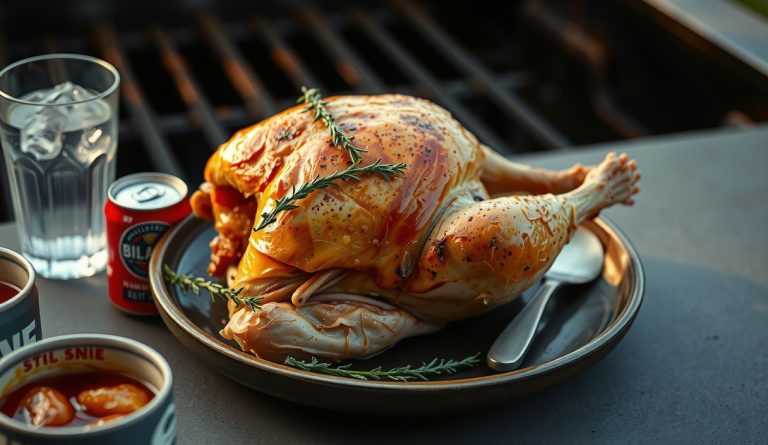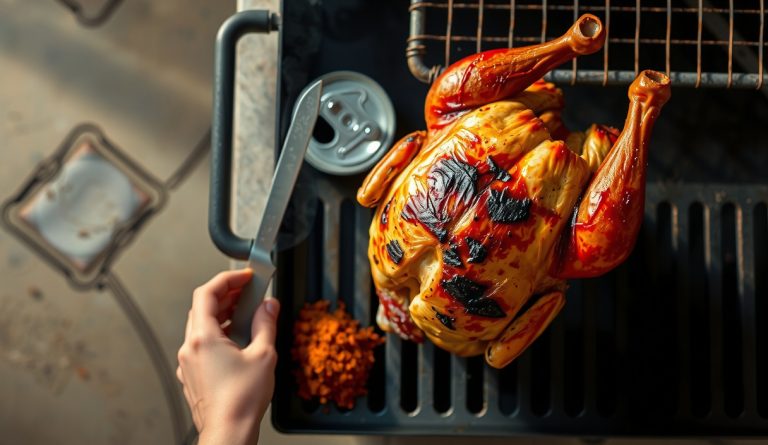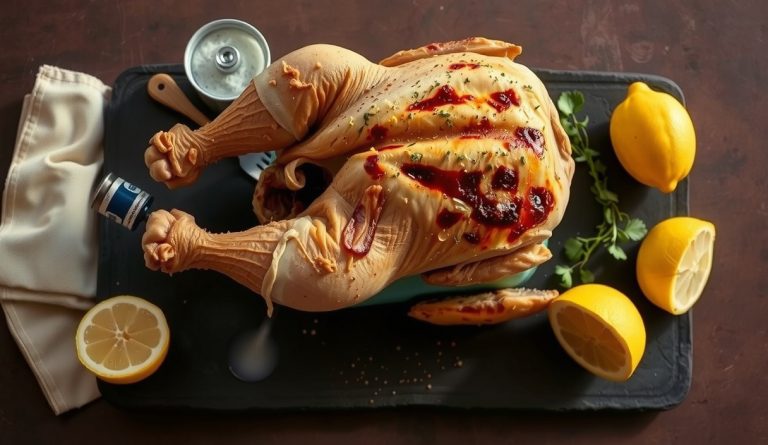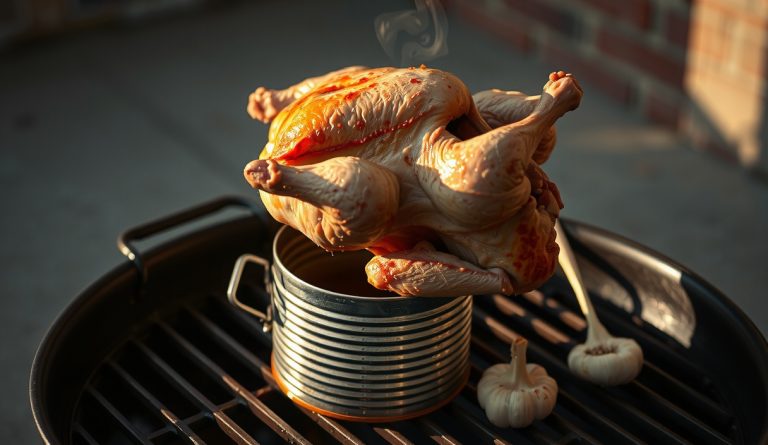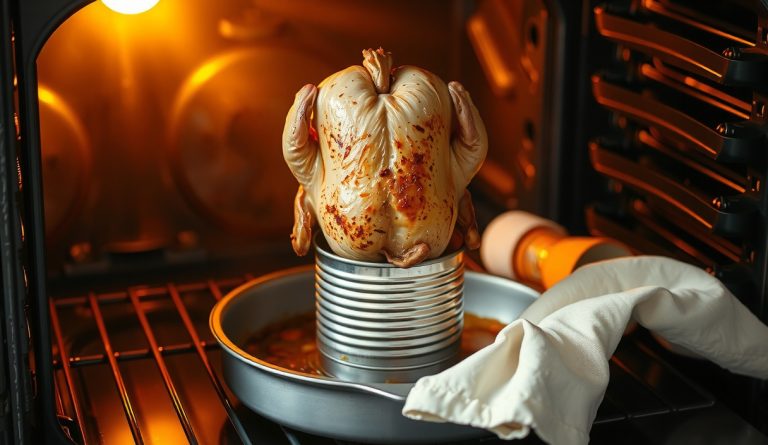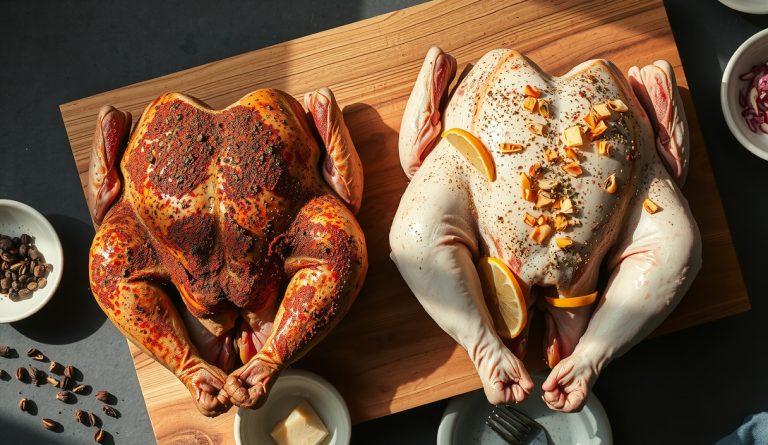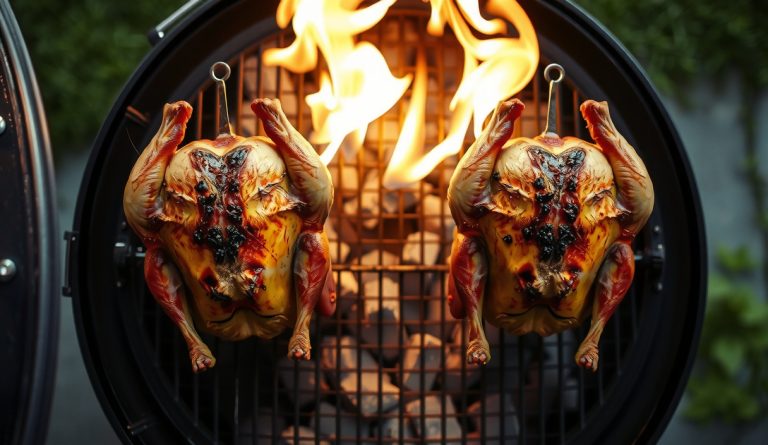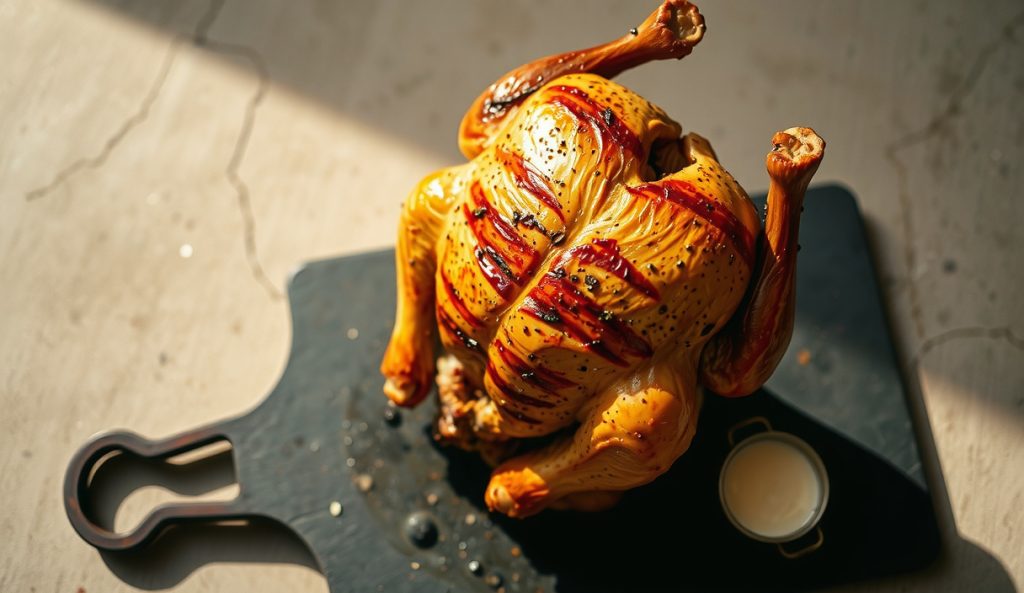
Beer-can chicken is one of the most keto-compatible BBQ cooks you can run — a whole bird is almost entirely protein and fat, and the vertical technique needs no sugary glaze to produce that mahogany crust. The carbohydrate work is limited to two specific places: the sugar in the dry rub and the beer in the can. Fix both and you have a showstopper with negligible net carbs.
What needs to change to make beer-can chicken keto?
Sugar in the rub: The canonical rub uses brown sugar, which contributes roughly 4–6 grams of carbohydrate per tablespoon and serves two real functions: it accelerates Maillard browning by providing carbonyl groups for the amino-carbonyl reaction, and it builds a light lacquered set on the skin surface. To replicate both effects without sucrose, use allulose as a 1:1 replacement. Allulose is a rare monosaccharide that browns and caramelizes almost identically to sucrose because it participates in the same Maillard chemistry — unlike erythritol, which does not brown well and leaves a cooling sensation on the palate. Allulose contributes essentially 0 net carbs (0.4 kcal/g, not metabolized).
If allulose is unavailable, a monk-fruit/erythritol blend will provide sweetness but expect marginally less crust color and a slight cool finish. Compensate by finishing the bird with 2–3 minutes of direct heat at the end of the cook to drive additional browning.
The beer: A standard 12-ounce lager contains roughly 12–15 grams of carbohydrate, and even though most of it stays in the can rather than entering the meat, some vapor condenses on the inner cavity wall. More practically, keeping a beer-filled can in a strict keto household is a minor friction point. Swap it for a half-filled can of unsalted chicken stock or bone broth — zero carbs, enhanced savory vapor, and arguably better flavor synergy with poultry. If you want to keep the beer ritual, several ultra-low-carb beers (1–2g carbs per can) exist and perform identically for vapor purposes.
Sides and serving: Skip the bun or bread entirely — beer-can chicken is already the centerpiece. Pair with roasted cauliflower tossed in the same rub blend, a simple dressed green salad, or grilled zucchini planks. Pork-rind crumbles make a satisfying textural garnish if you want something crunchy alongside. The drip pan juices collected beneath the bird during the cook are pure rendered fat and collagen-rich fond with effectively zero carbs — deglaze with apple cider vinegar for an instant keto pan sauce.
Net-carb delta: The canonical rub as written contributes approximately 8–10g net carbs across the full bird serving, primarily from brown sugar. The allulose swap reduces that to under 1g net carbs total. Per 6-ounce serving of meat, that is a reduction of roughly 1.5–2g net carbs — not dramatic per serving, but it keeps the cook compliant for strict tracking.
What stays exactly the same in the keto version?
The 24-hour dry brine, the vertical can geometry, the indirect 350°F two-zone fire, and the 160°F pull temperature are completely unchanged. The protein denaturation, collagen hydrolysis, and Maillard browning that define beer-can chicken are driven by heat and the amino-acid profile of the skin — not by sugar. The fat rendering from the skin, which is what produces that lacquered mahogany finish, is entirely keto-aligned.
When is the keto version the better choice?
This is the version to run when you are feeding a mixed table and want one centerpiece that satisfies keto eaters without a separate cook — the whole bird is naturally low-carb, and the rub swap is invisible to anyone who does not know it happened. The keto version is also the cleaner weeknight cook: no molasses-sticky drips, no flare-ups from burning sugar.
All temperatures, timing, and technique remain exactly as described at the original Beer-Can Chicken recipe — the only grill-side change is what goes in the can and the rub bowl.