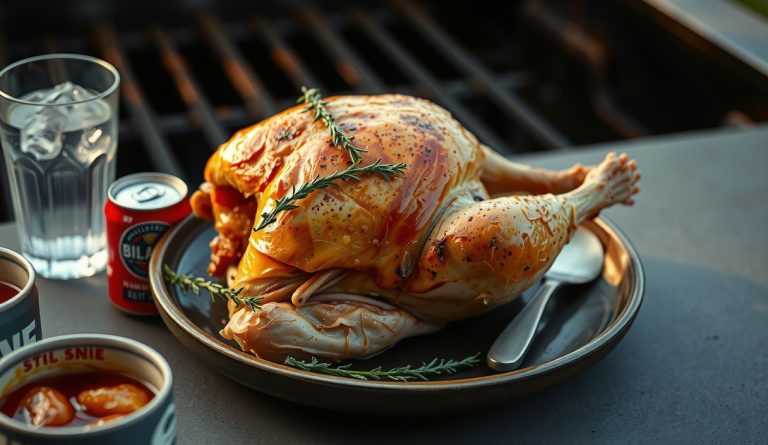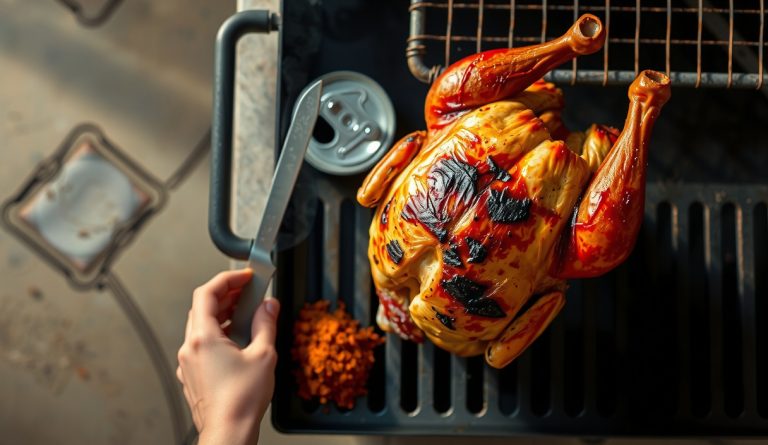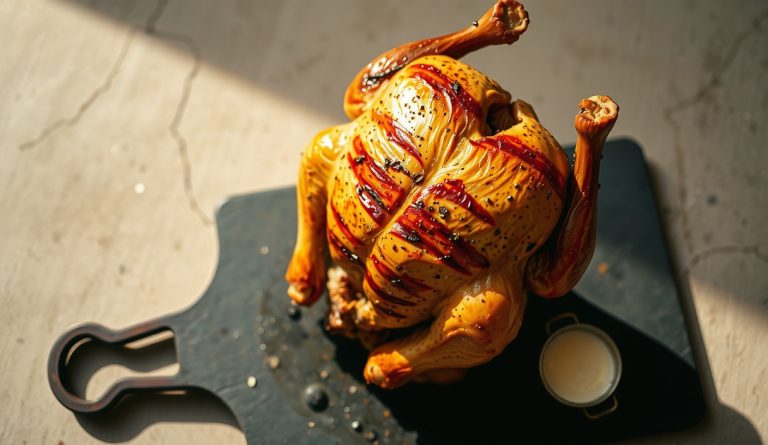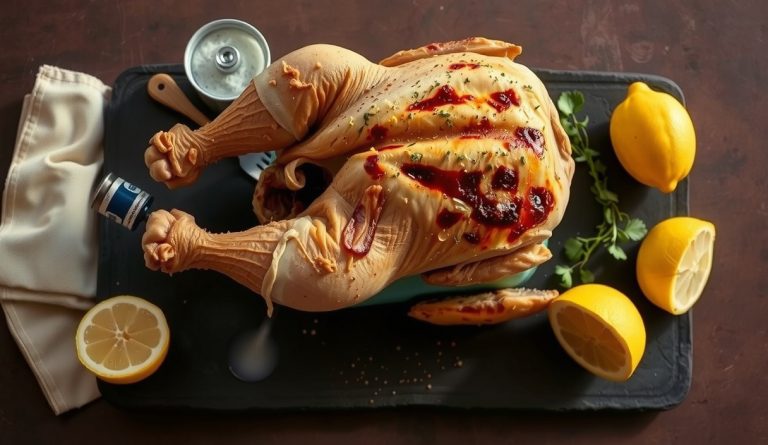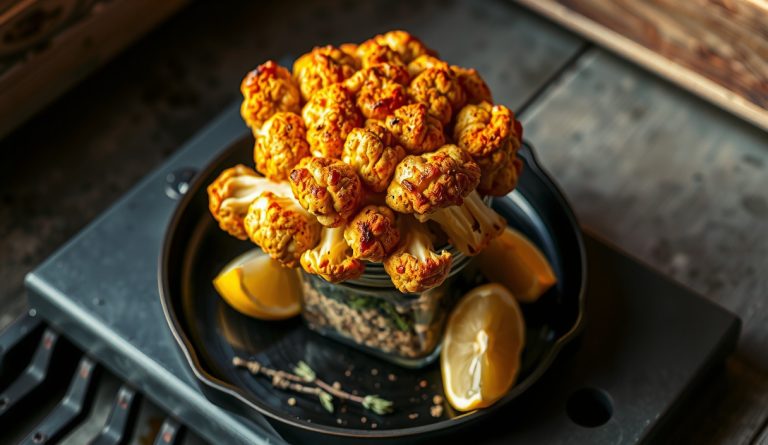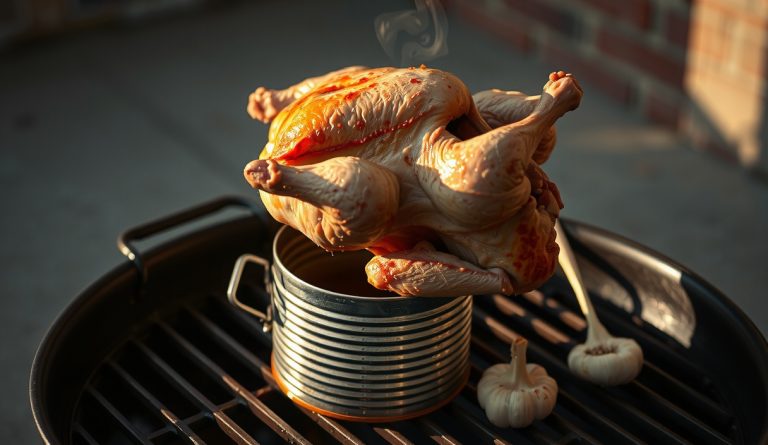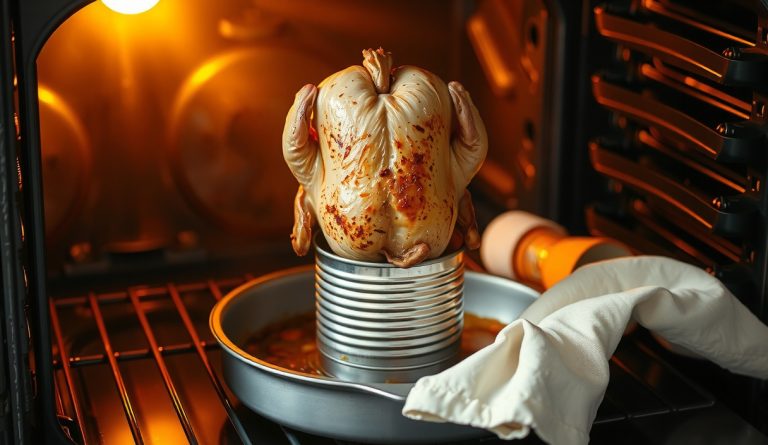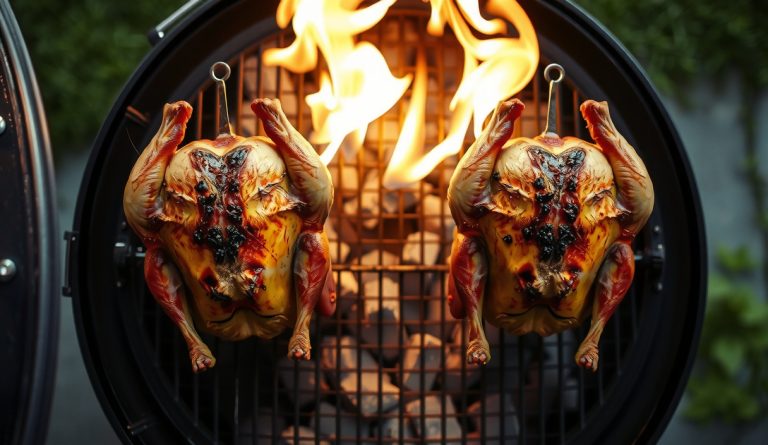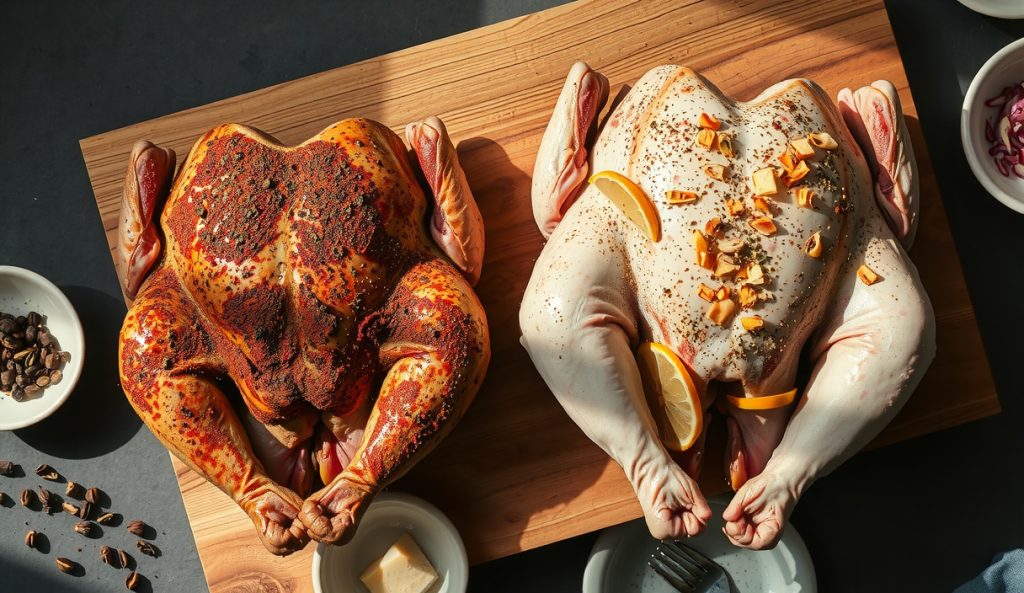
The canonical rub for Beer-Can Chicken on the Grill is deliberately neutral — broadly savory, built to work with any side dish and any crowd. That base is also a platform, and two specific rub directions are worth making explicit: a Texas-style black-pepper-forward build and a herb-driven Provençal profile. Both variations modify the flavor layer only. The functional chemistry layer — kosher salt concentration for the dry brine and baking powder percentage for skin pH — is non-negotiable and does not change in either version.
What changes between the Texas and Provençal rub versions?
For the Texas-style bird, swap the full smoked paprika measure for equal parts coarse-ground black pepper, then add a half-teaspoon of cayenne. Black pepper’s piperine delivers sharp, front-of-palate heat that behaves differently from cayenne’s capsaicin burn; together the two compounds build a layered heat profile that reads as classic Central Texas. This rub amplifies the smoke ring visually and complements heavier oak or post-oak smoke better than the base formula does.
For the Provençal profile, add two teaspoons of herbes de Provence and the zest of one lemon to the rub, and reduce the smoked paprika to one teaspoon. Lemon zest contributes limonene and citral — volatile terpenes that bloom under radiant grill heat and create a bright aromatic top note in the first few minutes of the cook before largely driving off. What remains is fixed flavor from the zest oils that have bonded to the fat in the skin. Herbes de Provence typically includes thyme, rosemary, savory, and lavender; the lavender fraction is subtle but prevents the profile from reading as a standard Italian seasoning. This variation pairs well with the apple cider can-liquid option from the no-beer variant.
What stays the same across all rub variations?
The kosher salt quantity and baking powder ratio from the canonical rub are fixed in both the Texas and Provençal variations. Baking powder raises the skin-surface pH, which accelerates Maillard reaction onset and produces deeper browning at lower temperatures — reducing or replacing baking powder disrupts that mechanism. Salt drives the dry-brine osmotic cycle that pulls surface moisture back into the meat as a seasoned brine. Neither ingredient can be adjusted without affecting the structural result of the finished bird.
When is each rub variation the better choice?
Choose the Texas build when cooking Beer-Can Chicken over hardwood or lump charcoal with added wood chunks — the bold pepper profile stands up to strong smoke in a way the neutral base rub does not. Choose the Provençal build for lighter-smoke cooks, warm-weather meals, or any situation where the bird will share a plate with Mediterranean sides, roasted vegetables, or a bright vinaigrette-dressed grain salad.
Use the full method, equipment, and base rub measurements from the original Beer-Can Chicken on the Grill.