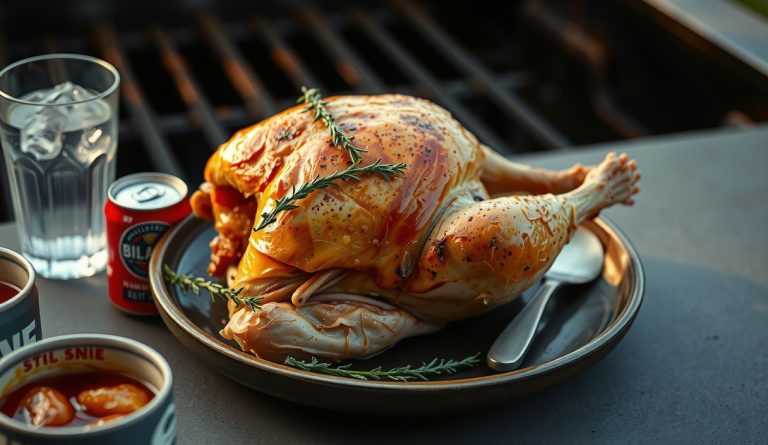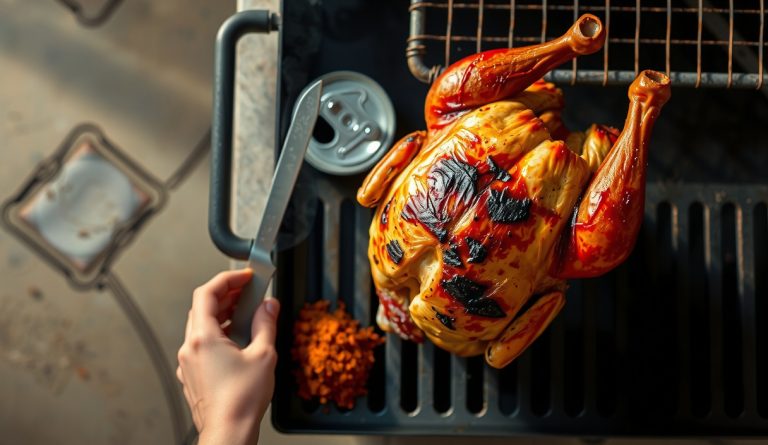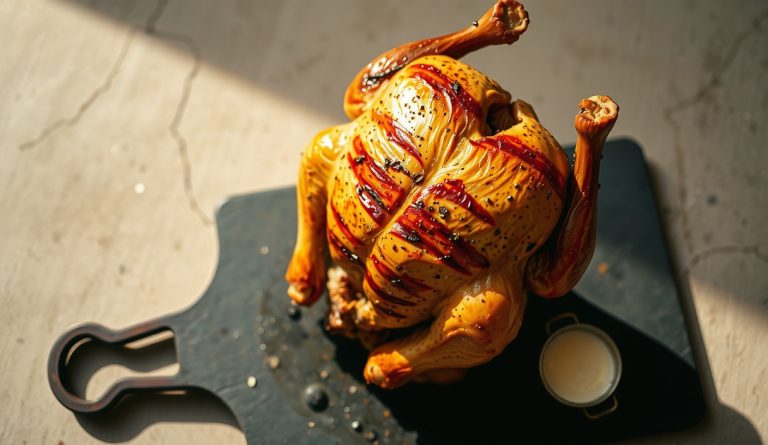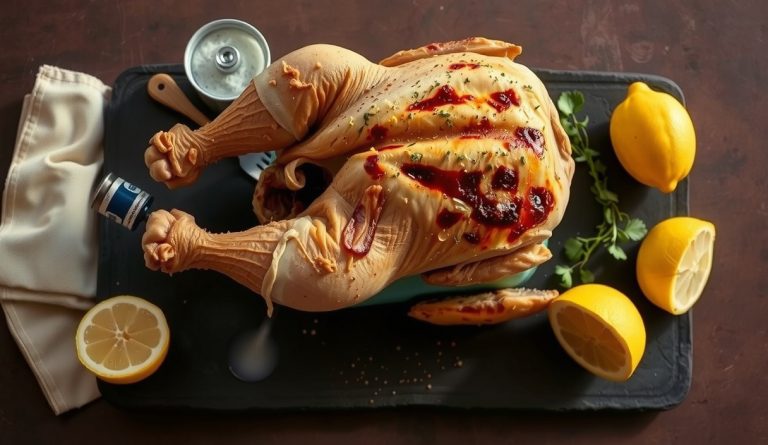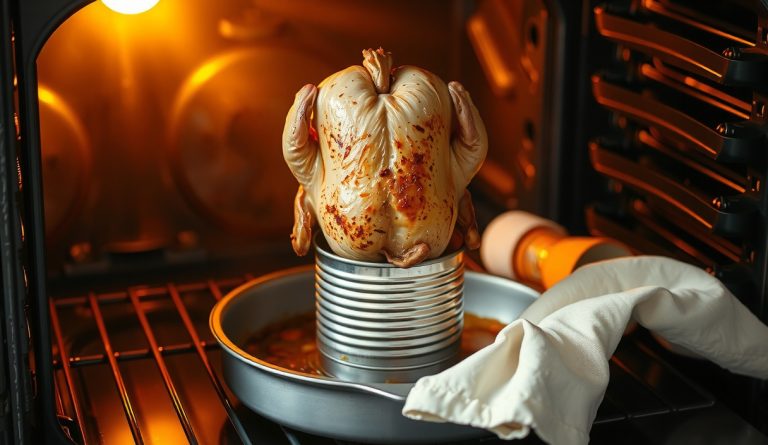
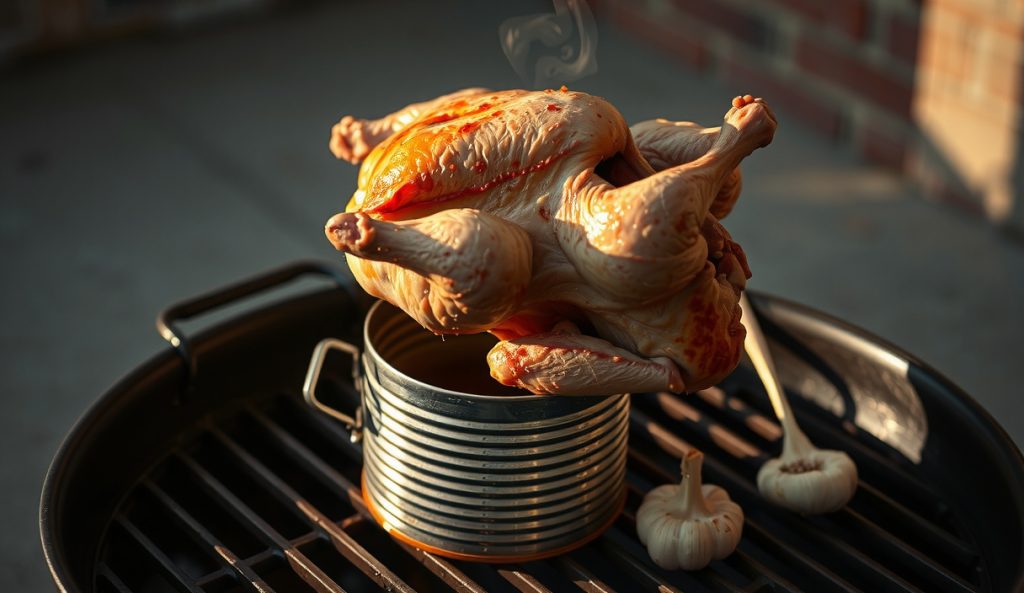
The beer in a beer-can chicken build is not there for taste — it is there for cavity humidity. A partially filled vessel generates low-pressure vapor inside the bird’s cavity during the cook, slowing moisture loss from the interior wall. That function is entirely liquid-agnostic. Low-sodium chicken broth or apple cider performs it just as well, and for cooks who prefer to keep alcohol out of the kitchen or want a more controlled flavor contribution, this swap is a strict upgrade.
The flavor case for broth or cider is real. Beer vapor inside a hot cavity is largely aroma-neutral by the time it contacts meat. Broth carries dissolved glutamates that concentrate slightly as the liquid reduces; apple cider brings a restrained fructose sweetness and malic acid brightness. Neither penetrates deep into the meat — cavity-humidity effects are surface-level — but the aromatic environment around the inner cavity wall is measurably different and noticeably more complex than beer provides.
What changes when you swap out the beer?
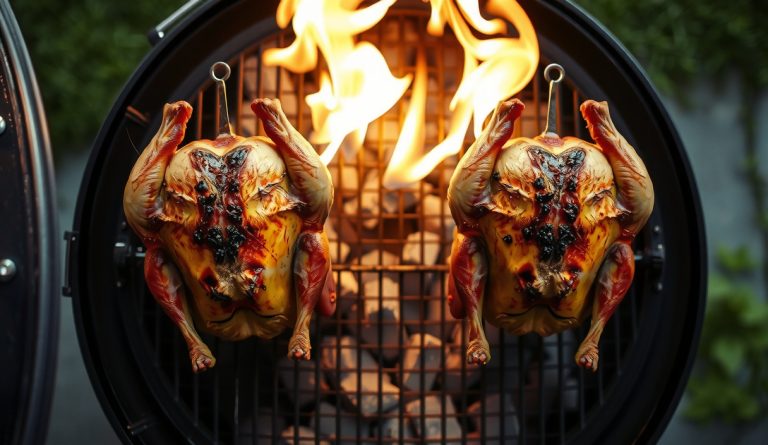
Replace the beer with a half-filled can of low-sodium chicken broth or unfiltered apple cider. Low-sodium matters: a standard broth at full-sodium concentration can leave a saltier residue on the cavity wall as liquid evaporates and reconcentrates. Add three or four smashed garlic cloves and a sprig of fresh thyme directly to the liquid before mounting the bird. The garlic and thyme volatilize gently at grill temperature — roughly 325–375°F in the cavity zone — releasing terpenes and allicin-derived compounds into the vapor stream. These aromatic molecules are small enough to diffuse briefly across the moist cavity surface, contributing a faint herbal note to the interior meat layer: the same mechanism that makes a bouquet garni functional in a braise.
What stays the same in the no-beer variation?
Every structural element of the canonical method carries over unchanged. The dry-brine timing, the baking powder ratio in the rub, the indirect two-zone setup, the target internal temperature of 165°F at the thickest part of the thigh, and the resting protocol all remain identical. The can is still half-filled — overfilling reduces headspace and limits vapor production, while underfilling risks the can running dry before the cook ends.
When is the no-beer variation the better choice?
Use this variation any time alcohol is off the table — whether by preference, dietary restriction, or because you simply do not have beer on hand. The no-beer build is also the right call when cooking for guests whose palates skew toward clean, savory-forward poultry rather than the faint malt undertone beer can contribute. If you are pairing the bird with a bright herb sauce or a citrus-forward side, the Provençal herb profile described in the rub-variations post pairs particularly well with the cider base.
Use the full method, equipment, and rub measurements from the original Beer-Can Chicken on the Grill.