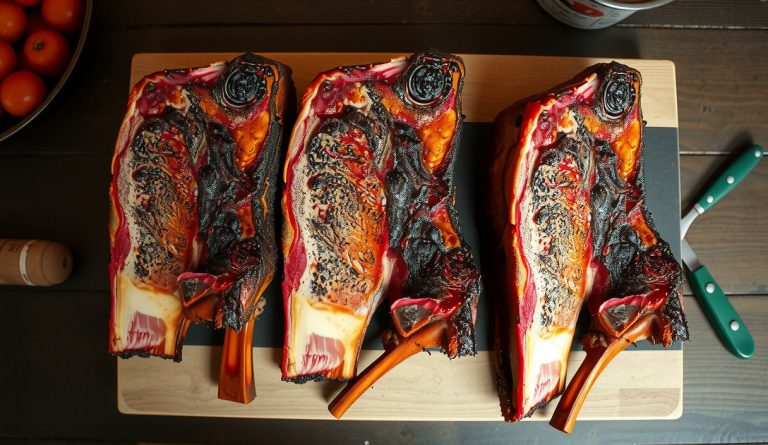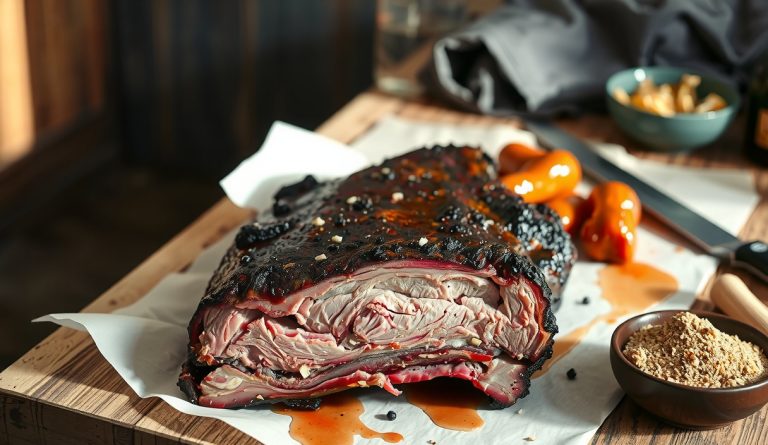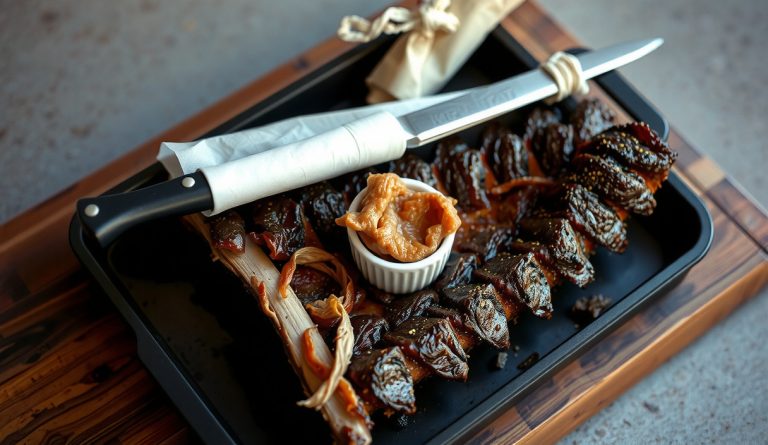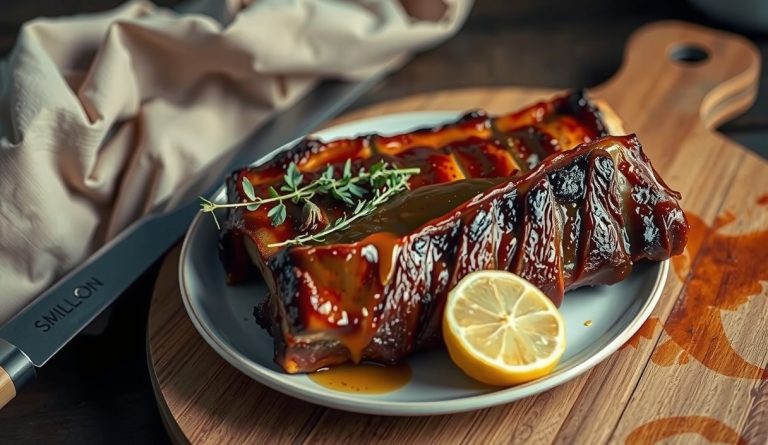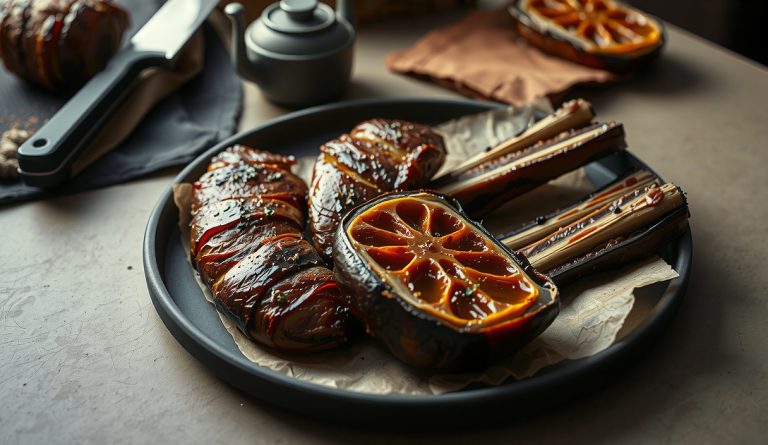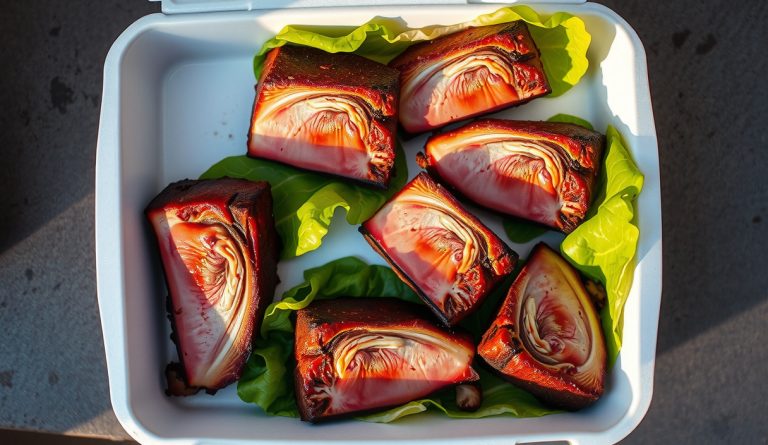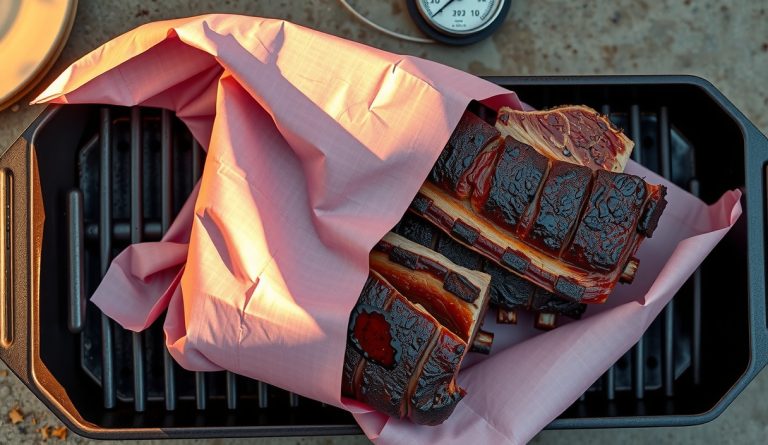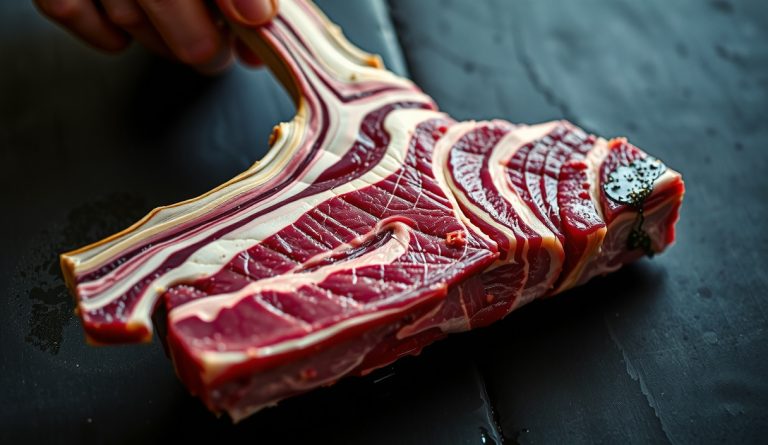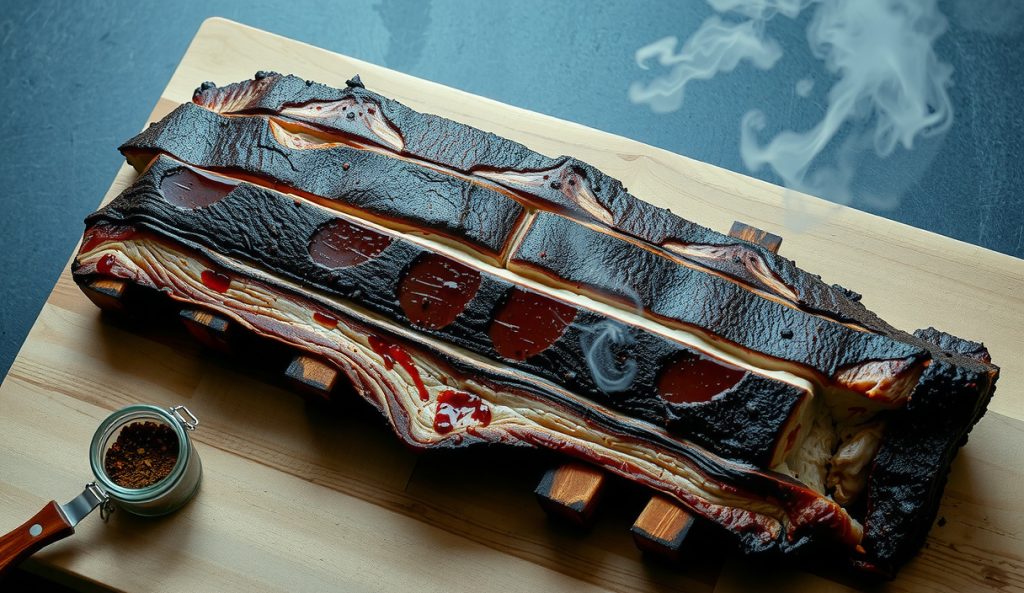
This Coffee-Ancho variation is for cooks who want a denser, darker bark with a flavor profile that leans into roast-bitter and fruited heat rather than pure black-pepper punch. The substitution is surgical — 25% of the black pepper is replaced with equal parts fine-ground espresso and ancho chile powder — but the downstream effects on crust chemistry and fat-penetration are significant enough to treat this as a distinct build.
What changes with the coffee-ancho rub?
Fine-ground espresso introduces an additional pool of Maillard precursors — reducing sugars and free amino acids — that react at the beef surface and accelerate crust formation by roughly the first hour of the cook. This means darker color appears earlier, which is a visual cue to monitor so you do not misread accelerated browning as over-cooking.
Because coffee volatiles begin to oxidize and turn acrid above approximately 250°F on a dry surface, the pit temperature is dropped to 240°F for the first three hours. Once the bark has set and surface moisture has dropped, the temperature can return to the standard 250°F–275°F range to finish the cook without risking bitterness.
Ancho chile powder contributes mild fat-soluble capsaicinoids — primarily capsaicin and dihydrocapsaicin at low concentration — that do not remain on the surface the way water-soluble compounds do. As intramuscular and intermuscular fat renders and migrates outward, the fat carries these compounds inward simultaneously, permeating the outer half-inch of meat with a slow, low-heat warmth that builds on the palate rather than hitting up front. The dried fruit and mild cocoa notes in ancho also bridge the espresso bitterness and the beef fat, creating a more unified flavor arc across the slice.
What stays the same as the base recipe?
Everything structural remains identical to the canonical method: the 16-mesh black pepper base, the kosher salt ratio, the target internal temperature of 203°F–207°F, the optional butcher-paper wrap at the stall, and the minimum 45-minute rest. The cook is still a low-and-slow process — the 240°F temperature adjustment is a front-loaded modification covering the first three hours, not a full-cook change.
When is the coffee-ancho rub the better choice?
Choose this rub when serving guests who find straight salt-and-pepper Central Texas style underwhelming, or when you want contrast against a sweet side like burnt-end beans or a corn pudding. The coffee-ancho build is also a strong option for competitions in open categories where bark thickness and visual depth factor into appearance scores — the accelerated Maillard activity produces a crust that photographs and plates with noticeably more drama than the base rub.
Use the full method, equipment list, and base rub measurements from the original Smoked Beef Ribs — Dino Bones recipe, substituting only the pepper fraction described above.