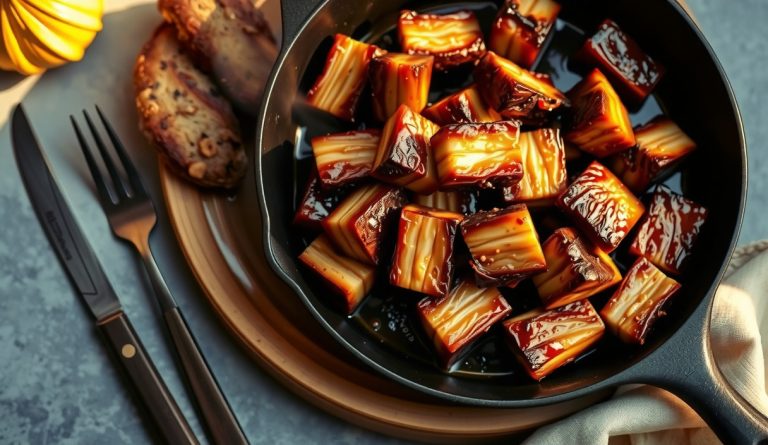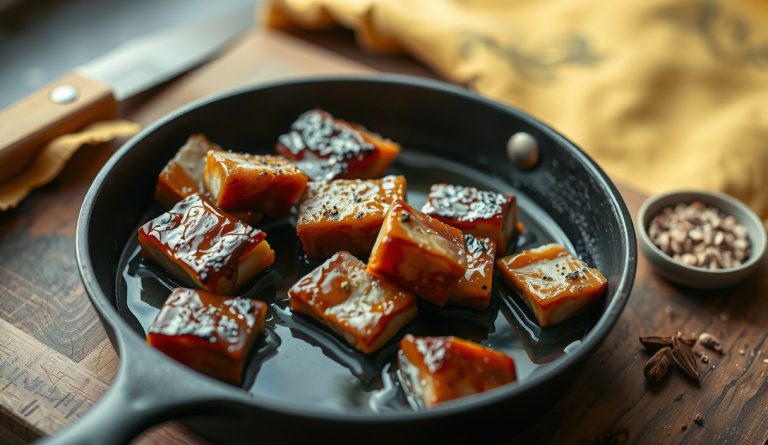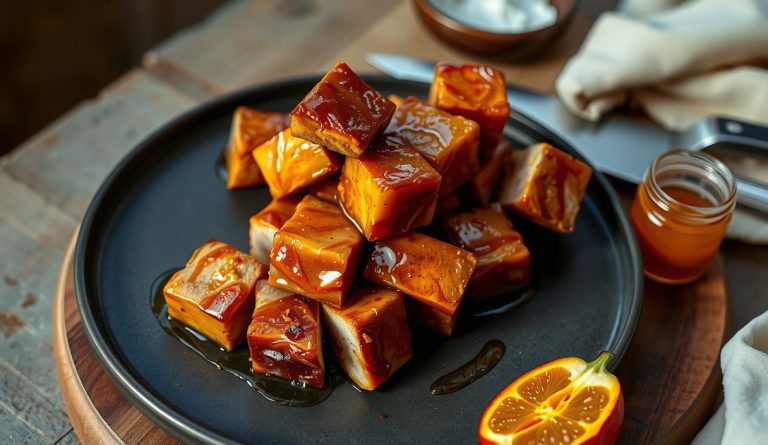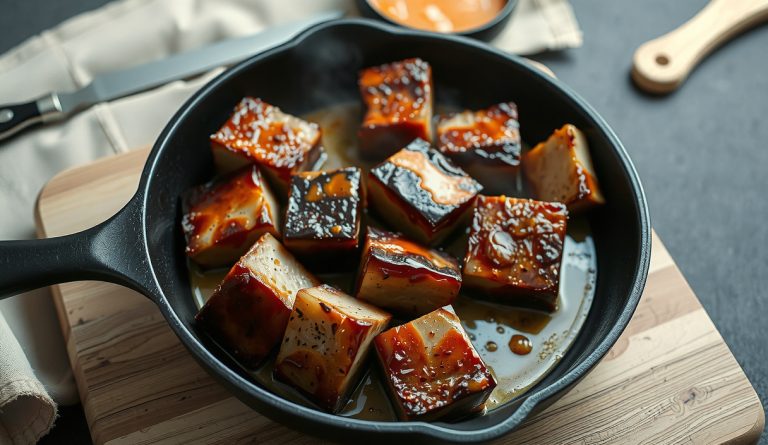
The canonical recipe is built around a single 5–6 lb slab of pork belly. When feeding a crowd, doubling to two slabs (10–12 lb total) is straightforward — but two specific decisions determine whether you get the same lacquered, bark-heavy result or a batch that steams soft and glazes unevenly. Get those two things right and the scaled batch performs identically to the original.
What changes when you scale pork belly burnt ends to a crowd?
Two slabs of pork belly fit comfortably on a full-size offset smoker or a 22-inch kettle running a two-zone setup, with both slabs positioned over indirect heat. The initial smoke phase and the wrapped braise phase require no structural changes beyond proportionally scaling your rub quantities and glaze ingredients.
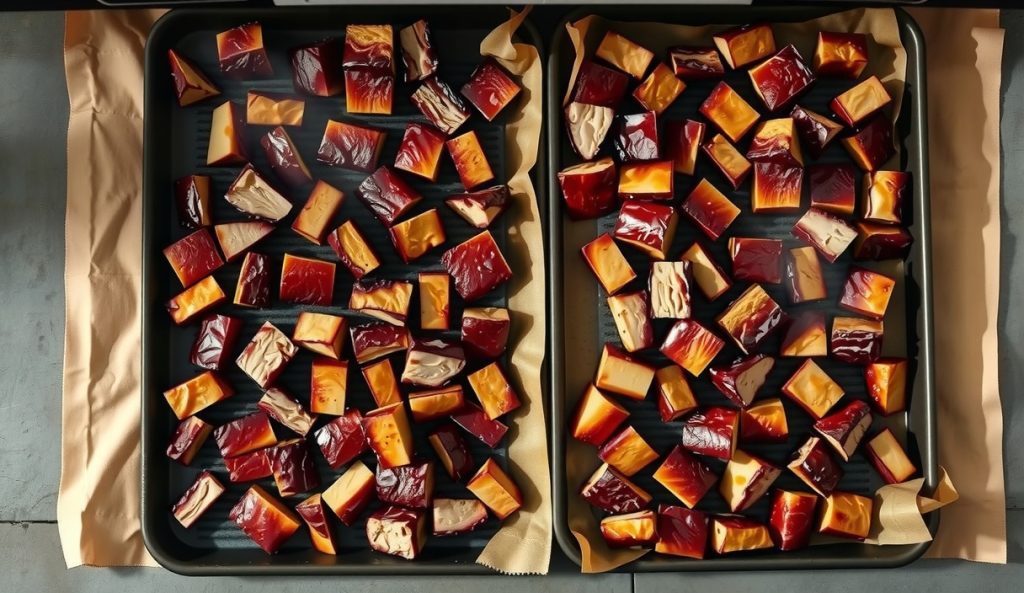
The critical adjustment is in the glaze phase: use two separate aluminum pans rather than combining all the cubes into one. Packing the cubes tightly raises the humidity inside the pan as rendered fat and added butter steam between pieces — that trapped-moisture environment suppresses surface dehydration and arrests the Maillard reaction on the bark precisely when crust development is most critical. Two pans maintain adequate spacing for steam to escape, allowing the glaze to reduce and the bark to tighten.
Budget an additional 30–45 minutes of total cook time for the larger batch. Two slabs represent significantly more thermal mass in the cook chamber, which depresses pit-temperature recovery after the door opens and slows the braise-phase internal temperature climb to the 190°F target.
What stays the same when you double the batch?
Target temperatures, the three-phase cook structure, smoker temperature (250°F throughout), and glaze composition are identical to the single-slab canonical recipe. Scaling from one to two slabs changes batch size and pan management — not the method, not the flavor architecture.
When is the scaled-up version the right choice?
This approach is the correct call for backyard parties of 12 or more, competition practice runs requiring high-volume output, or any event where running the smoker twice is impractical. A single cook, two pans, and a 30–45 minute time buffer covers the full crowd without compromising bark quality or glaze reduction.
Use the full method, equipment notes, and rub measurements from the original Smoked Pork Belly Burnt Ends recipe as the foundation for this scaled cook.