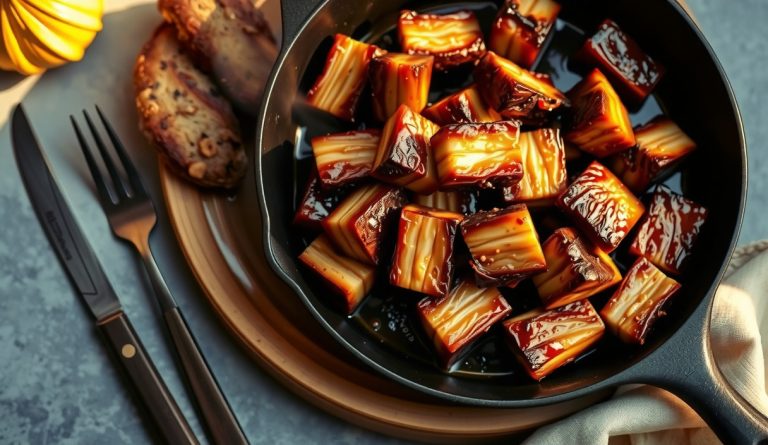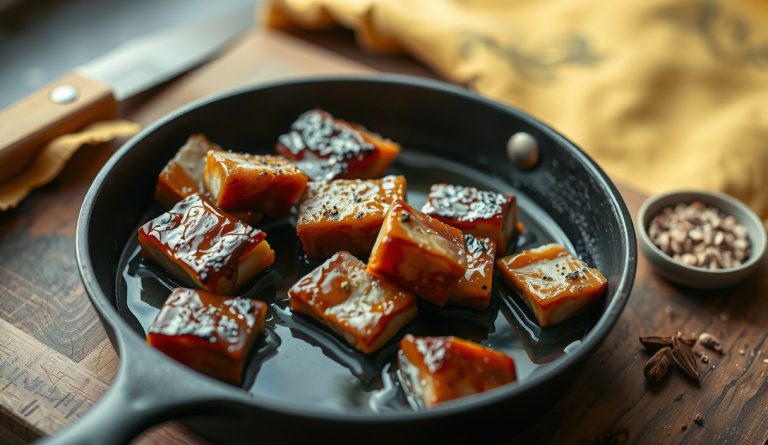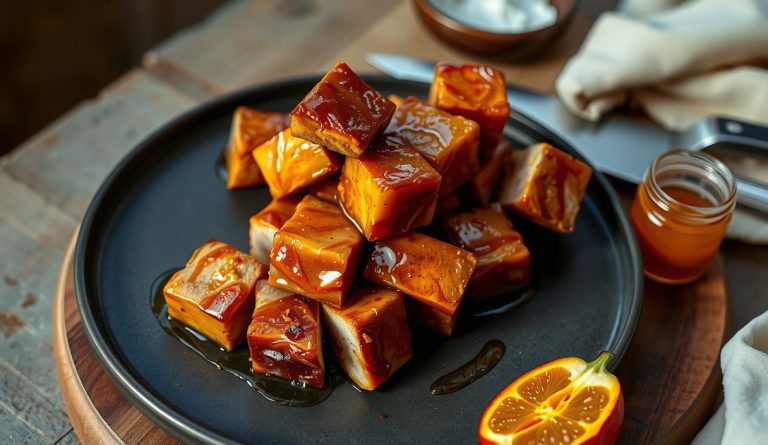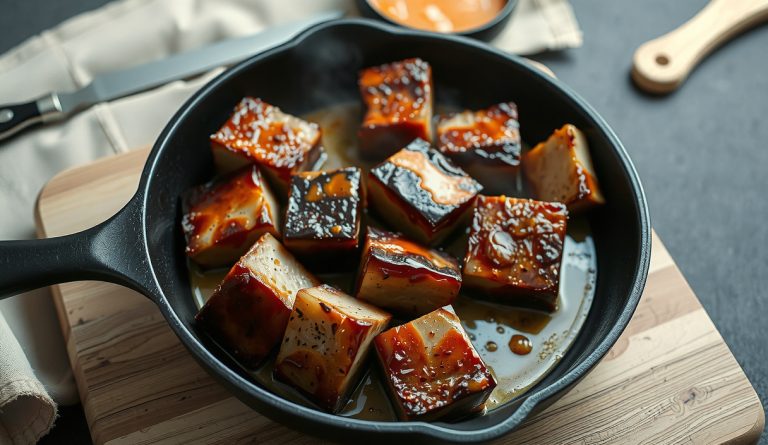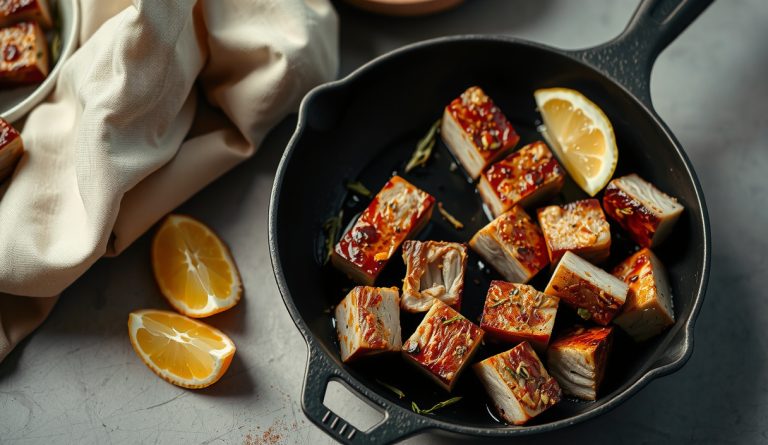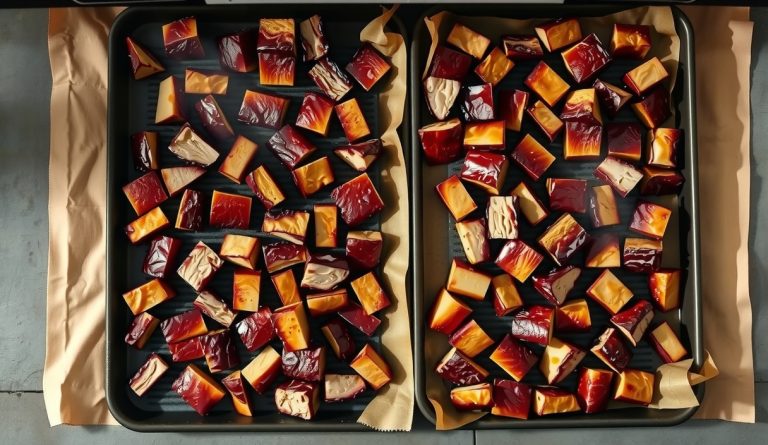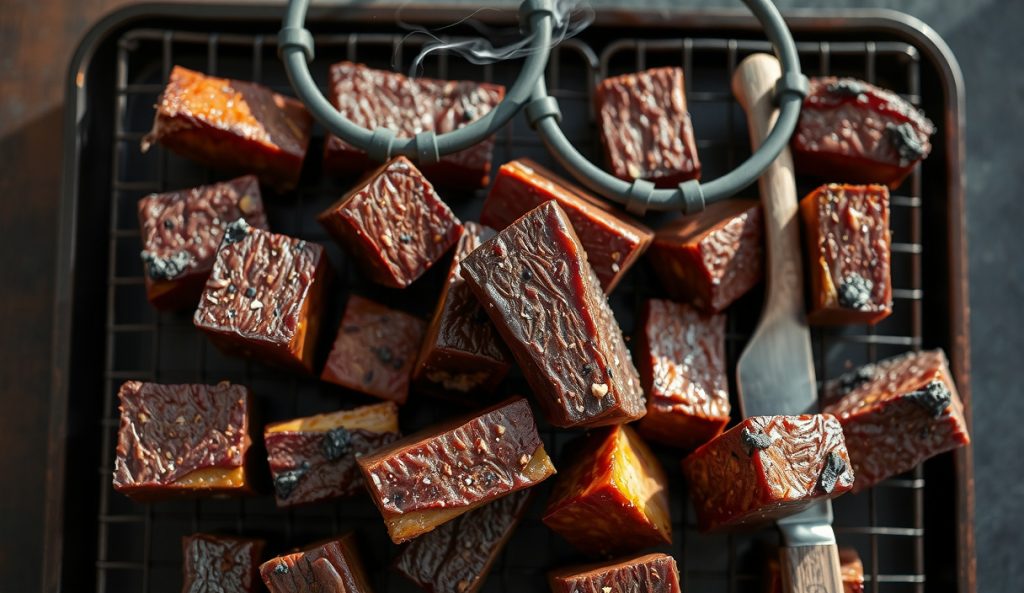
Most pork belly burnt ends recipes — including the canonical American Meathead version — center the final phase on a sweet, saucy glaze that transforms rendered cubes into sticky meat candy. This sauce-free bark variant strips that entirely. If your preference runs toward the unadulterated smoke-fat-salt character that defines great brisket burnt ends, or if you are serving guests who actively avoid added sugars, this approach delivers a fundamentally different cube: drier, crunchier, with a more aggressive smoke presence and no glaze complexity to soften it.
What exactly changes in the sauce-free bark variant?
After the braise phase reaches 190°F internal, skip the aluminum pan, butter, brown sugar, and BBQ sauce entirely. Instead, transfer the cubes directly back to the smoker grate — not a pan — in a single layer with spacing between pieces. Increase the smoker temperature to 275°F and cook uncovered for 20 minutes.
Why does the sauce-free finish produce a crunchier crust? The science
The elevated 275°F finish drives two simultaneous processes that together build the bark. First, rapid surface dehydration: the exposed fat cap and bark surface lose moisture quickly at 275°F compared to the humid environment inside a covered pan, tightening the exterior into a genuinely crunchy crust. Second, a final Maillard burst: residual sugars in the dry rub — particularly from paprika and any garlic powder — react with surface amino acids at the higher temperature, deepening color and producing additional flavor compounds in the outer crust. The result sits texturally closer to traditional brisket point burnt ends than to the glazed, candy-style pork belly version — less sticky, more crackling-adjacent.
What stays the same as the original recipe?
The initial smoke phase at 250°F for 3 hours on the grate, the foil-wrapped braise phase to 190°F internal, and the dry rub composition are all unchanged from the canonical method. The sauce-free bark variant modifies only the final 20–30 minutes and eliminates the glaze pan step entirely.
When is the sauce-free bark variant the better choice?
This variant outperforms the canonical glazed method when you are serving guests on low-sugar or keto diets, when you want a burnt end that pairs with sharp vinegar-based sauces on the side rather than carrying glaze internally, or when you simply want smoke and rendered fat to be the dominant narrative rather than caramelized sweetness. The sauce-free bark variant also extends better as a leftover — the dry bark holds its texture longer than a glazed cube does.
Use the full method, equipment, and rub measurements from the original Smoked Pork Belly Burnt Ends.