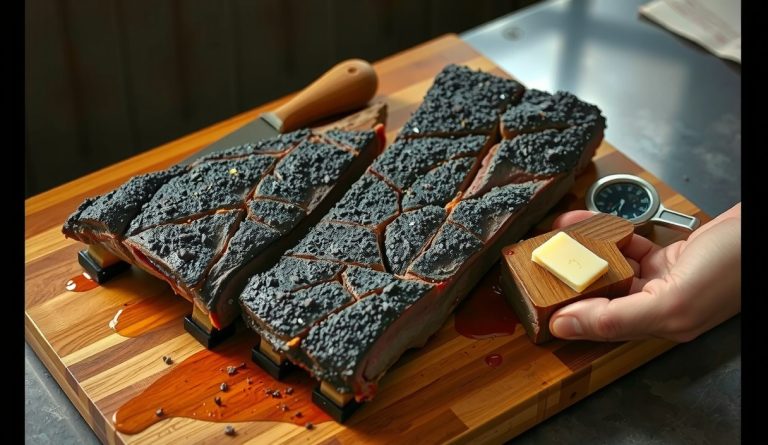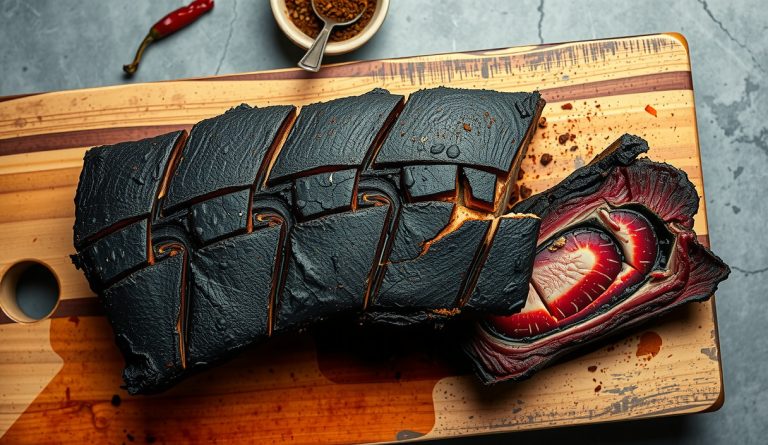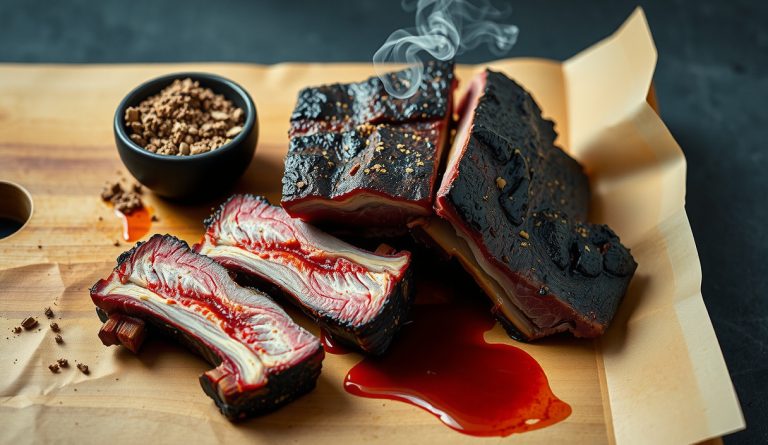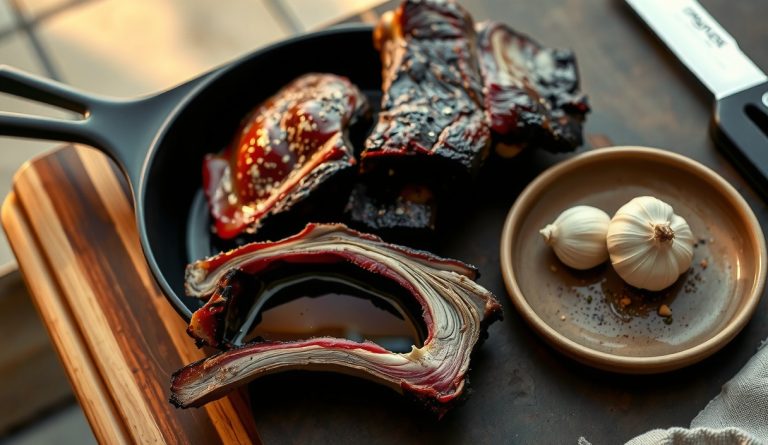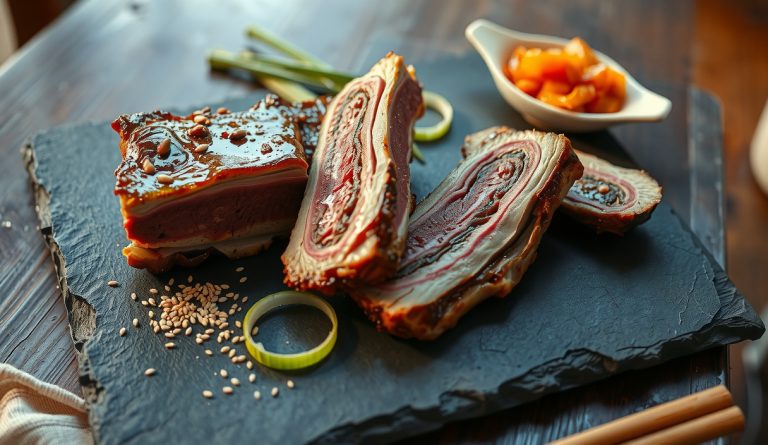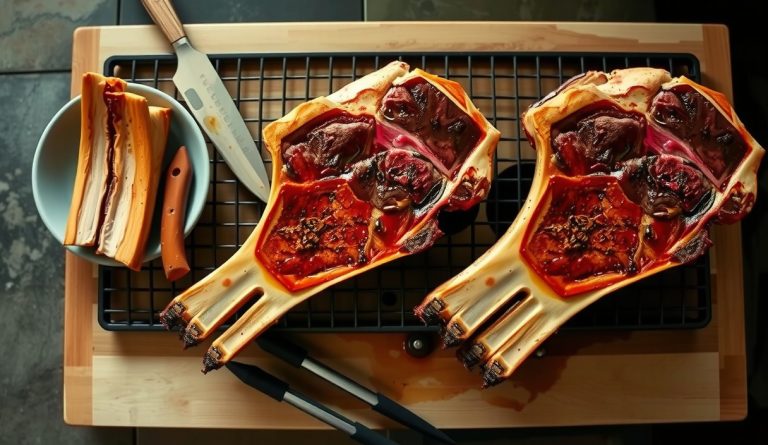
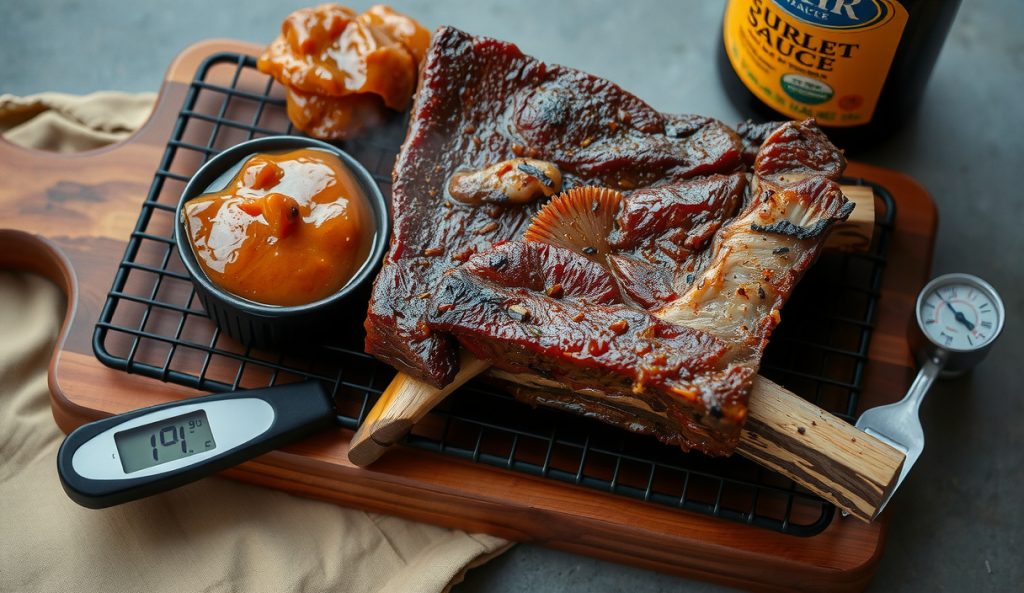
This variation is for cooks managing dietary sodium targets without wanting to sacrifice bark quality or the deep savory character that makes smoked short ribs worth the time. The adjustment is minimal: reduce the salt in the rub by half and apply a thin pre-cook coat of Worcestershire sauce to compensate. The result maintains a functional bark and full collagen conversion with meaningfully less sodium per serving.
What changes when you cut the salt by half?
Reduce the salt component of the rub by 50 percent. Before applying the rub, brush or wipe a thin coat of Worcestershire sauce over all surfaces of the ribs. Worcestershire provides two functional contributions to the low-sodium short ribs. First, its free glutamates — derived from fermented tamarind, anchovies, and molasses — activate umami receptors and partially replace the flavor depth that salt normally amplifies. This is a perceptual compensation, not a chemical equivalence to sodium chloride.
Second, the Worcestershire sauce’s reducing sugars from molasses and tamarind supply Maillard substrate at the surface, supporting bark formation even at the reduced salt concentration that would otherwise yield a slightly less cohesive crust. The bark will still form but may present as slightly thinner and less pronounced than the canonical version. Sodium chloride draws surface moisture outward, concentrates proteins, and physically firms the pellicle that becomes bark — halving the salt reduces that effect. The Worcestershire coat partially compensates through its sugar and protein content, producing a functional rather than identical bark.
Internal moisture, fat rendering, and the collagen-to-gelatin conversion timeline are unaffected by the salt reduction. Those processes are driven by temperature and time, not by surface salt concentration.
What stays the same in the low-sodium version?
Pit temperature, wood selection, cook duration, target probe tenderness, and resting protocol are all unchanged from the canonical method. The collagen hydrolysis that produces the short rib’s characteristic gelatin-rich, pull-apart texture is entirely a function of sustained heat above approximately 160°F — salt plays no role in that conversion. Every structural element of the original technique applies without modification.
When is the low-sodium adaptation the better choice?
Use this adaptation when serving guests managing hypertension, heart disease, or kidney-related sodium restrictions. It is also the right call when the smoked short ribs will be paired with already-salty accompaniments such as soy-based dipping sauces or cured side dishes, where cumulative sodium at the plate would otherwise climb sharply.
This is equally a practical choice when short ribs are being prepared for meal prep and will be reheated in braises or stews that introduce additional sodium from stock or seasoning. Keeping the base preparation lower in sodium preserves flexibility in the finished dish.
Use the full method, equipment, and base rub ratios from the original Smoked Beef Short Ribs.