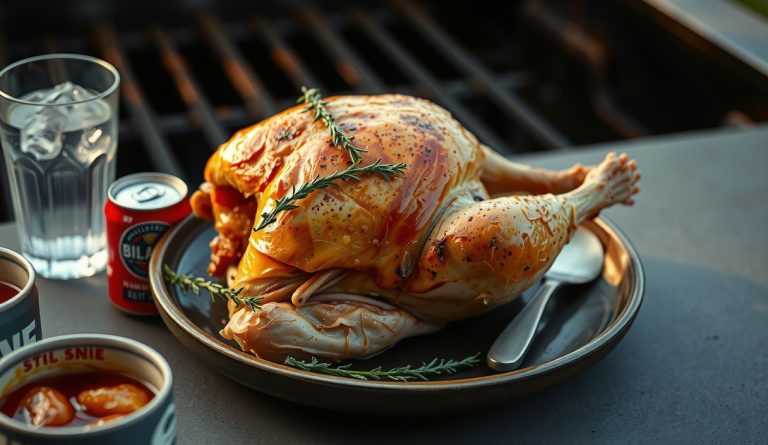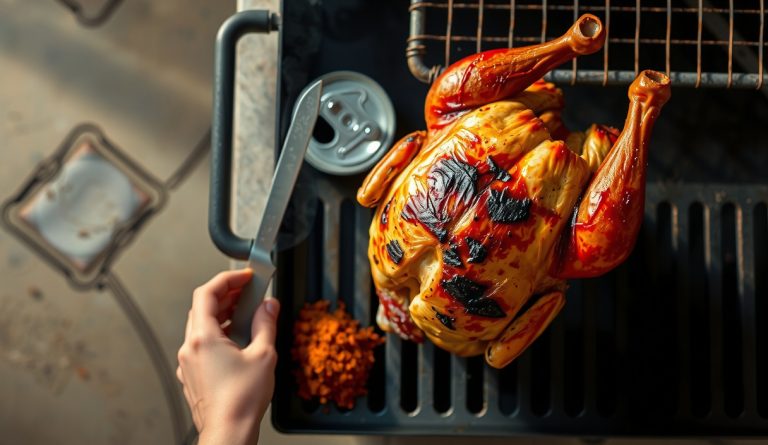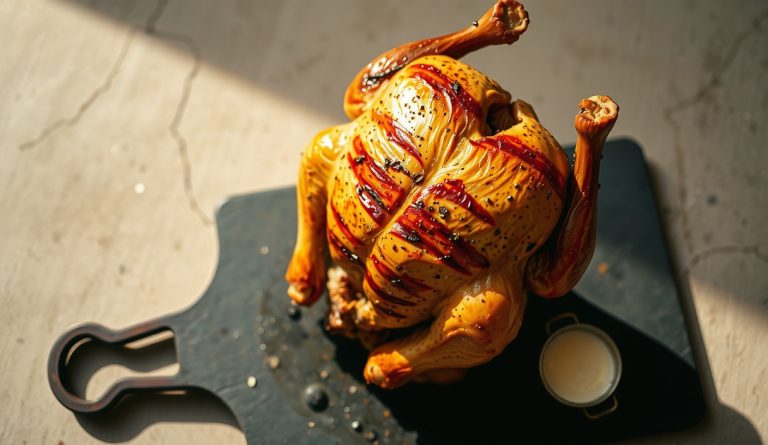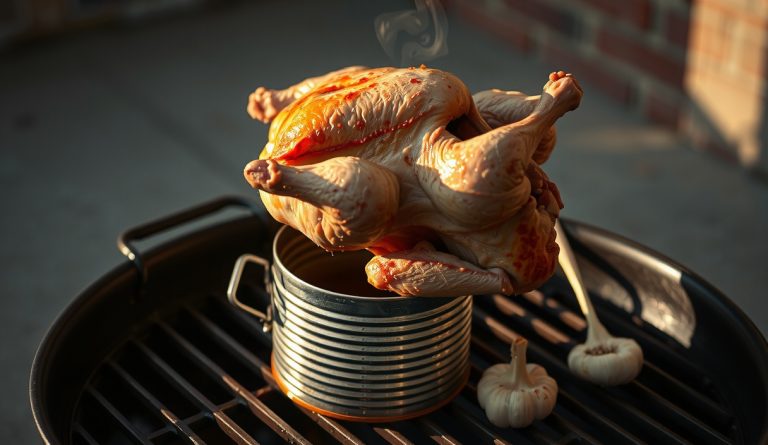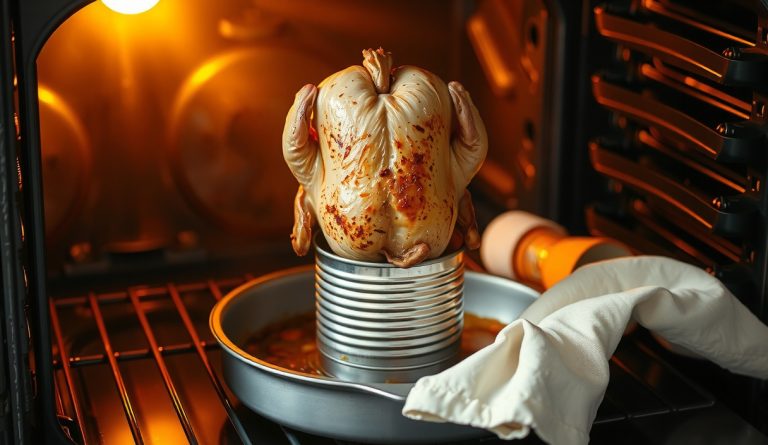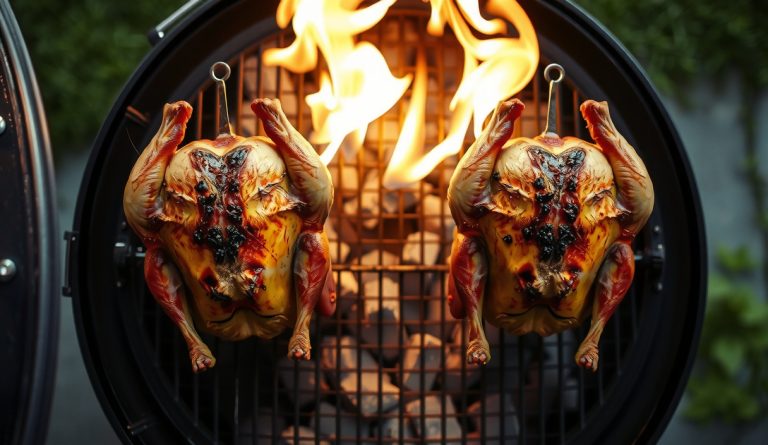

The dry brine is the heart of Beer-Can Chicken, and the dry brine is almost entirely salt. That creates a genuine tension for anyone managing sodium intake: salt is not decorative here. Salt drives the osmotic moisture cycle that swells the myofibrillar proteins, builds the pellicle that underpins the Maillard crust, and seasons the meat from the inside out. A low-sodium adaptation means working with the physics, not pretending salt is optional.
What changes in the low-sodium version?
The dry brine salt level: The canonical Beer-Can Chicken recipe calls for 0.5 teaspoon kosher salt per pound — roughly 1.75–2.25 teaspoons for a 3.5–4.5-pound bird. Reduce this to 0.2 teaspoon per pound, a 60% cut. Osmotic draw and reabsorption still occur at this lower level; the depth of penetration and degree of protein swelling are reduced but not eliminated. Expect the meat to be noticeably juicy, just slightly less dramatically so than the full-salt version. The pellicle will form, but it will be thinner and less tacky.
Potassium chloride substitutes: Salt substitutes based on potassium chloride (KCl) can replace 25–50% of the sodium chloride in the brine without meaningful loss of osmotic function — KCl draws moisture and reabsorbs in essentially the same two-phase cycle. The practical ceiling is around 50% substitution; above that, potassium chloride’s characteristically bitter, metallic edge becomes noticeable on plain chicken skin, which has no competing fat or acid to mask it. A 50/50 NaCl/KCl blend at 0.3 teaspoon total per pound lands near 500–600mg sodium for the whole bird while preserving reasonable brine mechanics.
Rebuilding flavor without salt: The rub needs to work harder when sodium is reduced. Double the smoked paprika and black pepper. Add lemon zest or orange zest — the aromatic oils (limonene, citral) volatilize on the hot skin and deliver brightness that the palate reads as seasoning even without sodium. Dried thyme, rosemary, and garlic powder amplify Maillard precursors (free amino acids) at the skin surface. A light brush of apple cider vinegar on the bird before applying the rub raises surface acidity, which sharpens flavor perception and partially compensates for the sodium deficit on the palate.
The can liquid and any sauces: Use unsalted chicken stock or plain water in the can — canned stocks often contain 400–800mg sodium per cup. If you finish the bird with any sauce, make it from scratch; commercial BBQ sauces routinely run 200–350mg sodium per two-tablespoon serving. Reduce with fruit juice (apple, tamarind) and finish with cider vinegar to build complexity without added salt.
Bark honestly assessed: With 60% less salt, the bark will be measurably less thick and slightly less crunchy. To compensate, extend the uncovered dry-brine rest to the full 24 hours (longer pellicle drying time), and run the grill at the higher end of the 350–375°F range for the last 20 minutes of the cook. Increased radiant heat drives faster surface dehydration and more aggressive Maillard activity — partially recovering the crust texture that salt would have built.
What stays the same in the low-sodium Beer-Can Chicken?
The vertical can geometry, the two-zone indirect fire, the 160°F pull temperature, and the full 24-hour brine window are all unchanged in the low-sodium version. The collagen hydrolysis in the thighs, the convective heat wrapping, and the cavity vapor function require no sodium to work. The grill does the heavy lifting.
Who is this low-sodium version the right choice for?
This version is the right call for anyone managing hypertension, heart disease, or kidney disease who still wants a genuinely crafted whole bird off the grill — not a bland concession but a deliberately rebuilt flavor profile that leans on smoke, citrus, and spice rather than sodium.
The full brine science and cook technique are detailed at the original Beer-Can Chicken recipe — use it as your timing and temperature reference while applying the salt adjustments above.