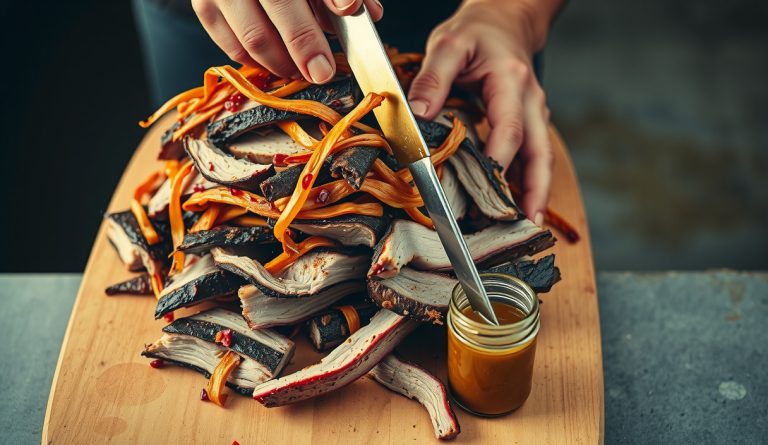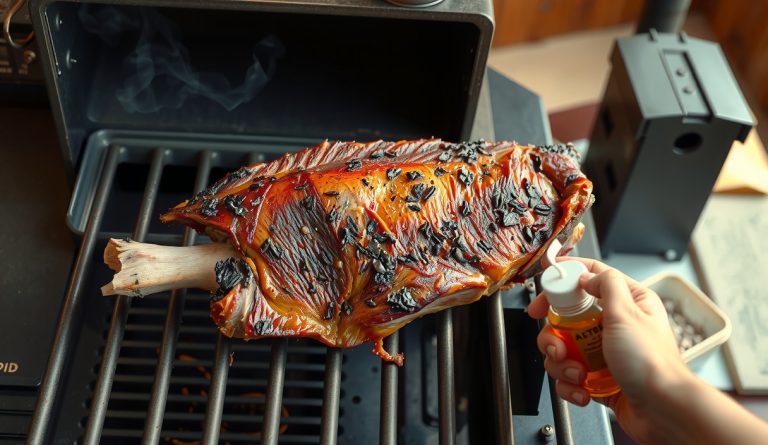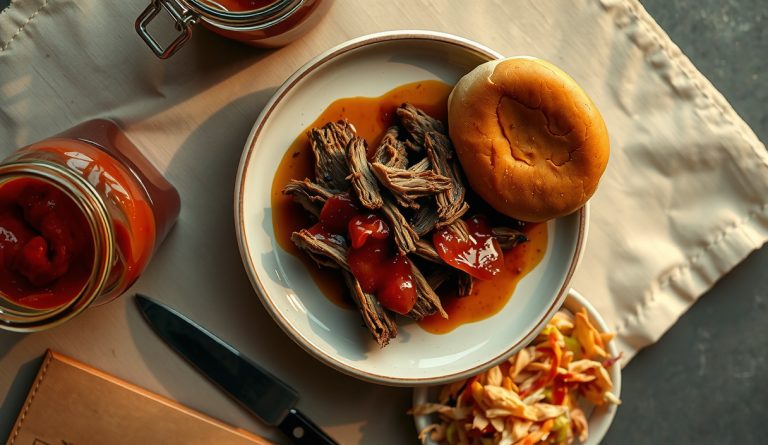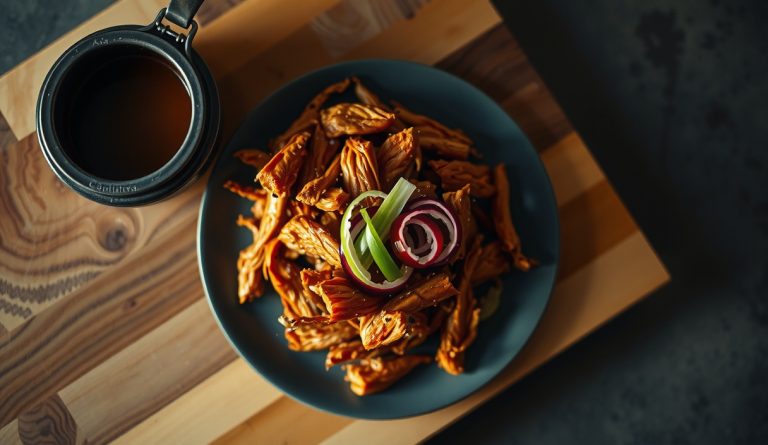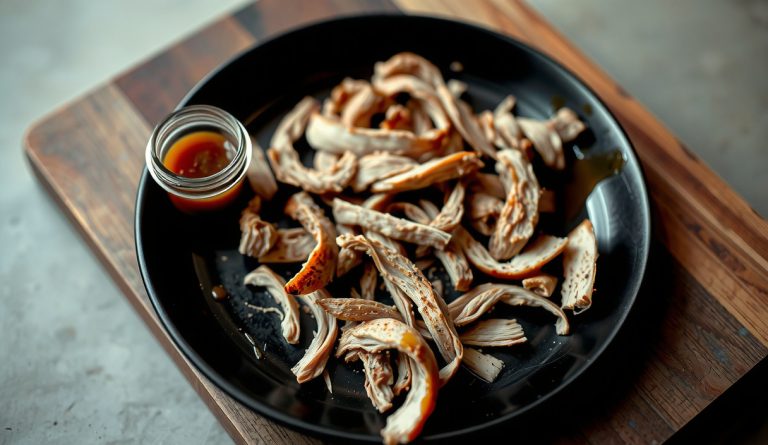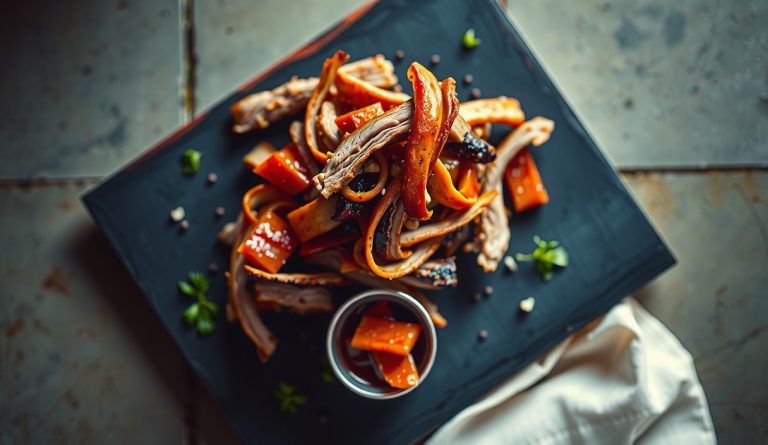
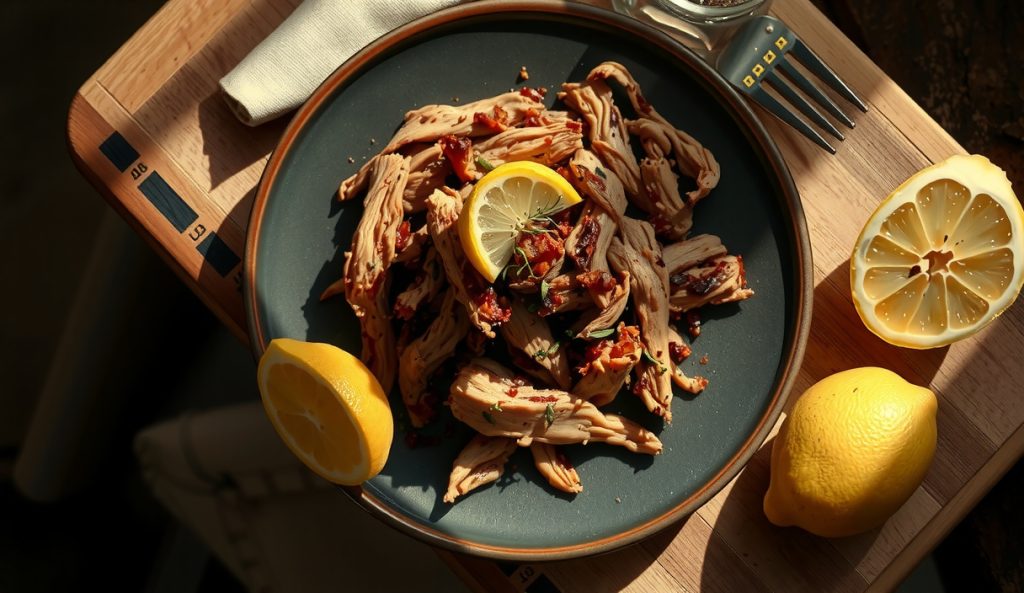
Reducing sodium in a recipe built around a salt-forward dry brine is not a cosmetic adjustment — it is an intervention in the surface chemistry that drives bark formation and the seasoning gradient running deep into the shoulder. This guide is honest about what you give up and gives you specific, food-science-grounded tools to recover as much of it as possible. The goal is not a simulacrum; it is a genuinely good pulled pork that a cardiologist-advised diner can eat without compromise.
What changes when you cut sodium from Carolina pulled pork?
Dry brine salt quantity: The canonical recipe applies kosher salt at roughly 0.5% of meat weight as an overnight dry brine. Salt’s roles here are threefold: it dissolves myosin at the surface, creating a sticky protein matrix that binds the rub and helps bark adhere; it draws moisture out osmotically, then reverses that flow to carry dissolved flavor compounds deeper into the muscle; and it seasons the full cross-section over the long cook. Reduce application to 0.2% of meat weight — approximately 40% of the original dose on an 8–10 lb butt. This still initiates protein denaturing at the surface for bark formation, but the osmotic gradient is weaker, meaning the seasoning front penetrates less deeply. Accept this trade-off and compensate with finish seasoning at pull time.
Potassium chloride salt substitute: Replacing 30–40% of the reduced kosher salt with a potassium chloride blend (Nu-Salt, NoSalt) partially restores the ionic strength at the surface and mitigates bark loss. Potassium chloride activates the same salt taste receptors as sodium chloride at low concentrations but introduces a metallic-bitter note above roughly 30% substitution — stay at or below that threshold. The Maillard reaction that builds bark does not require sodium specifically; it requires a dry, high-temperature surface, which the reduced-salt brine still provides as long as the shoulder sits uncovered in the refrigerator overnight and surface moisture is allowed to evaporate fully before the cook begins.
Compensating flavor architecture: With salt dialed back, lean harder on the tools that contribute zero sodium. Increase black pepper in the rub — piperine compounds amplify perceived savory intensity through a separate trigeminal pathway. Add coarse-cracked coriander seed (0.5 tsp per pound) and dried thyme to the rub; both contribute aromatic complexity that registers in the same sensory register as salt-enhanced savoriness. A few strips of lemon or orange zest steeped in the ACV mop for 30 minutes before application raises perceived brightness substantially, and the brain partially conflates that brightness with saltiness in complex smoked foods.
Commercial mop sauces and Worcestershire: Bottled Eastern NC mop sauces can carry 200–400 mg sodium per tablespoon from added salt and sodium benzoate preservatives. Build the mop from scratch using only raw apple cider vinegar, red pepper flakes, and the reduced salt dose described above. Verified low-sodium Worcestershire is available — Wan Ja Shan makes one under 140 mg per tablespoon — if you want that additional savory layer without blowing the sodium budget.
Bark honesty: The finished bark will be slightly thinner and less dramatically crusted than the full-sodium version. To partially recover that crust, remove the butcher-paper wrap during the final 90 minutes of the cook, allowing surface moisture to evaporate and Maillard products to concentrate. The smoke and acid flavors will still be fully present in the finished pulled pork.
What stays the same in the low-sodium version?
The 225°F chamber temperature, the 203°F internal pull target, the oak-hickory fire, the mop cadence, and the full 12-to-14-hour cook window are all unchanged. Collagen hydrolysis to gelatin is thermodynamically indifferent to the sodium concentration in the rub; the pulled pork will still be unctuous and strand-ready at 203°F regardless of how much salt was applied at the surface 24 hours earlier.
Who is this low-sodium adaptation the better choice for?
This adaptation is essential for guests managing hypertension, heart failure, or chronic kidney disease who are cleared for high-quality protein but restricted to under 1,500 mg sodium daily. Using a scratch-built mop and a 60% salt reduction, a typical serving comes in well under that threshold while delivering the smoke, acid, and bark that define Eastern NC pulled pork.
The full timing, probe targets, and mop protocol are detailed at the original recipe — apply them with the adjusted salt quantities described above.