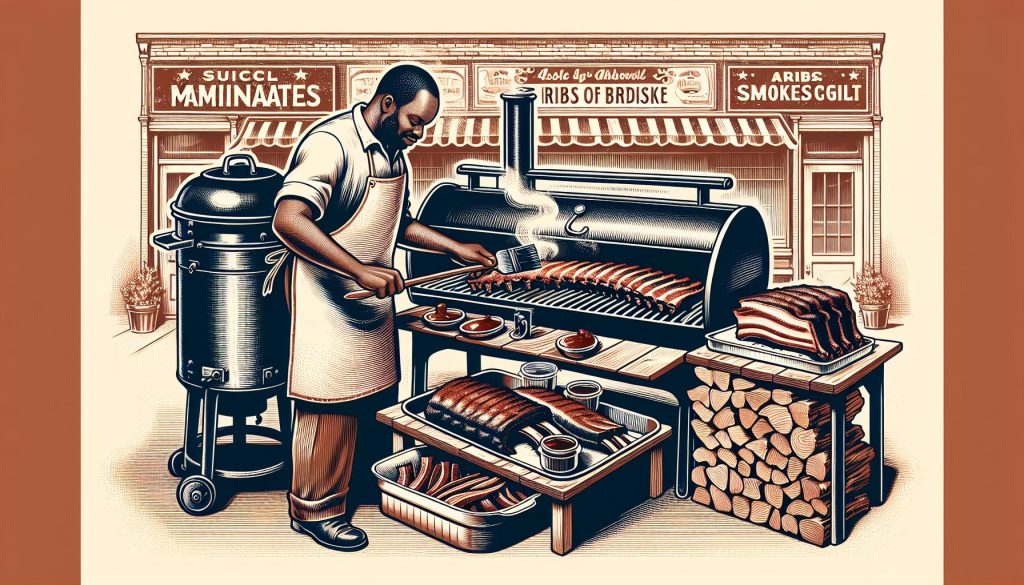
Key Takeaways
- Authentic Barbecue Experience: Oklahoma Joe’s Barbecue combines traditional smoking techniques and bold flavors to create smoky, tender meats like ribs, brisket, and pulled pork.
- Essential Ingredients: Select high-quality cuts of meat and use specific rubs and marinades, such as a brisket rub with kosher salt and black pepper, and a Kansas City-style sauce for an authentic taste.
- Necessary Equipment: Choose the right tools and equipment, including an offset smoker for precise heat control, long-handled tongs, a basting brush, and an instant-read thermometer.
- Preparation Process: Properly marinate the meat and preheat the smoker with hardwoods like oak or hickory, while maintaining a consistent temperature between 225°F and 250°F.
- Cooking Techniques: Monitor and adjust the smoking process carefully, apply mop sauce regularly, and ensure meats reach their ideal internal temperatures, such as 195°F to 205°F for brisket.
- Serving Suggestions: Enhance the barbecue spread with sides like coleslaw, baked beans, and cornbread, while presenting the meats with fresh herbs and barbecue sauces for a complete dining experience.
Ingredients
Essential for crafting Oklahoma Joe’s Barbecue, selecting the right components sets the foundation for that authentic smoky goodness. Here’s what you’ll need:
Meat Selection
- Brisket – 10-12 pounds, well-marbled
- Pork Butt – 8-10 pounds, bone-in preferred
- Ribs – 2 racks of baby back or St. Louis-style ribs
Rubs and Marinades
- Brisket Rub:
- 1/4 cup kosher salt
- 1/4 cup coarse black pepper
- 2 tablespoons paprika
- 1 tablespoon garlic powder
- 1 tablespoon onion powder
- Pork Rub:
- 1/2 cup brown sugar
- 1/4 cup paprika
- 1 tablespoon black pepper
- 1 tablespoon salt
- 1 tablespoon chili powder
- 1 tablespoon garlic powder
- 1 tablespoon onion powder
- Kansas City-Style Sauce:
- 2 cups ketchup
- 1/2 cup apple cider vinegar
- 1/2 cup brown sugar
- 1/4 cup molasses
- 1/4 cup prepared mustard
- 1 tablespoon smoked paprika
- 1 teaspoon black pepper
- 1 teaspoon onion powder
- 1 teaspoon garlic powder
- 1 teaspoon cayenne pepper
Equipment and Tools

Mastering Oklahoma Joe’s Barbecue requires the right equipment and tools. Here’s what you’ll need to get started on your journey to creating delicious smoked meats.
Grill and Smoker Setup
To achieve that iconic smoky flavor, you need the right grill and smoker setup. Opt for a high-quality offset smoker to provide precise heat control and ample cooking space. A sturdy charcoal grill is essential for smaller cuts and quicker cooks. Ensure your smoker has a built-in thermometer for accurate temperature monitoring. Additionally, invest in a chimney starter to light your coals efficiently and a heat deflector to maintain even temperatures throughout the cooking chamber.
Essential Barbecuing Tools
Equipping yourself with essential barbecuing tools is crucial for a successful barbecue session. Here’s a list of must-haves:
- Long-handled Tongs: For safely handling meat over high heat.
- Basting Brush: To apply sauces and marinades evenly.
- Instant-read Thermometer: For gauging internal meat temperatures.
- Meat Injector: To infuse flavors deep into the meat.
- Heat-resistant Gloves: To protect your hands from high temperatures.
- Butcher Paper: For wrapping brisket and ribs to retain moisture during smoking.
- Large Cutting Board: For carving and serving your smoked meats.
- Spray Bottle: Filled with water or apple juice to keep meat moist during long cooks.
Ensure your tools are durable and easy to clean for a hassle-free barbecue experience.
Preparation

Getting ready for Oklahoma Joe’s Barbecue requires careful preparation. Here, we will guide you through marinating the meat and prepping the smoker for a successful barbecue session.
Marinating the Meat
- Select Your Meat: Choose high-quality cuts like ribs, brisket, or pork shoulder for the best results. Ensure the meat is fresh and well-marbled.
- Prepare the Marinade: Combine olive oil, apple cider vinegar, brown sugar, garlic powder, onion powder, smoked paprika, salt, and pepper in a bowl. Mix well.
- Marinate the Meat: Place the meat in a large resealable bag or a shallow dish. Pour the marinade over the meat, ensuring it’s fully coated. Seal the bag or cover the dish.
- Refrigerate: Let the meat marinate in the refrigerator for at least 4 hours, preferably overnight, to allow the flavors to penetrate deeply.
- Occasional Turning: Turn the meat occasionally to ensure even marination.
- Clean the Smoker: Ensure your smoker is clean and free from leftover ash or debris from previous use.
- Prepare the Wood: Select hardwood such as oak, hickory, or mesquite. Soak the wood chunks or chips in water for at least 30 minutes for a slow, smoky burn.
- Load the Charcoal: Fill the charcoal chamber with lump charcoal for a steady, long-lasting heat source.
- Light the Charcoal: Use a chimney starter to light the charcoal, ensuring an even and thorough burn.
- Arrange the Wood: Once the charcoal is ashed over, add the soaked wood chunks on top of the hot coals to begin generating smoke.
- Adjust the Vents: Set the smoker’s vents to control airflow and maintain a consistent temperature of around 225°F to 250°F.
- Preheat the Smoker: Allow the smoker to preheat for about 15-20 minutes before placing the meat inside.
By following these steps for marinating the meat and prepping the smoker, you’re well on your way to crafting delicious Oklahoma Joe’s Barbecue.
Cooking Instructions
Now that your meat is prepped and your smoker is ready, it’s time to dive into the art of cooking Oklahoma Joe’s Barbecue. Follow these steps for perfect, mouthwatering results.
How to Smoke the Meat
- Load the Smoker: Place your marinated meat directly on the grill grates, ensuring enough space between pieces for even smoking.
- Maintain Temperature: Aim for a consistent temperature between 225°F to 250°F. Use a built-in thermometer or an external one for accuracy.
- Add Wood Chips: For that authentic smoky flavor, add hardwood chips like hickory or oak to the smoker. Soak chips in water for at least 30 minutes before use to create steady smoke.
- Monitor and Adjust: Check the temperature every 30 minutes, adjusting vents and adding more wood chips or charcoal as needed.
- Mop the Meat: Every hour, apply a mop sauce with a brush to keep the meat moist and flavorful. Use a mixture of apple cider vinegar, water, and a dash of your favorite barbecue rub.
- Check for Doneness: Smoke your meat until it reaches the appropriate internal temperature. Use a meat thermometer to check:
- Ribs: 190°F to 203°F
- Brisket: 195°F to 205°F
- Pulled Pork: 195°F to 205°F
- Rest the Meat: Once cooked, remove the meat from the smoker and let it rest for at least 15-30 minutes. This allows juices to redistribute, resulting in tender slices.
- Preheat the Grill: Preheat your grill to high heat (around 450°F) for direct grilling or moderate heat (300°F to 350°F) for indirect grilling.
- Direct Grilling: Place smaller cuts of meat, like chicken wings and sausages, directly over the flames. Cook each side for 4-6 minutes until thoroughly charred and cooked to an internal temperature:
- Chicken Wings: 165°F
- Sausages: 160°F
- Indirect Grilling: For larger cuts like roasts and whole chickens, place meat on the indirect heat side of the grill. Close the lid and cook until it reaches the proper internal temperature:
- Whole Chicken: 165°F in the thickest part
- Ribeye Roast: 135°F for medium-rare
- Flip and Rotate: For even cooking, rotate the meat halfway through the cooking time. Turn smaller cuts only once to avoid losing juices.
- Use a Meat Thermometer: Always use a meat thermometer to check for doneness, ensuring safe and perfect results every time.
- **Rest Before
Serving Suggestions
Your Oklahoma Joe’s Barbecue is ready! Enhance your culinary experience with these serving tips.
Accompaniments
Complete your barbecue spread with traditional and complementary sides:
- Coleslaw: Offers a refreshing crunch and tangy flavor.
- Baked Beans: Provides a rich, smoky complement to the meats.
- Potato Salad: Adds a creamy, cool contrast to the barbecue.
- Cornbread: Perfectly balances the smoky flavors with its slightly sweet taste.
- Pickles and Onions: Adds a bite that cuts through the richness of the meat.
- Macaroni and Cheese: A comfort food favorite that pairs well with smoky barbecue.
- Generous Portions: Serve generous cuts of brisket, ribs, and pulled pork for a hearty platter.
- Layering: Layer different meats for a dynamic visual appeal.
- Garnish: Use fresh herbs like parsley or cilantro for a pop of color.
- Separate Sides: Arrange sides in small bowls or plates to keep flavors distinct and prevent any sogginess.
- Smoked Sauces: Provide small ramekins of barbecue sauce for dipping.
Conclusion
Oklahoma Joe’s Barbecue offers an authentic experience that brings traditional smoking techniques right to your backyard. With the right ingredients and essential rubs, you can master the art of slow-cooking ribs, brisket, and pulled pork to perfection. Follow the detailed instructions on preparing your smoker and maintaining temperature to ensure your meat turns out tender and flavorful.
Pair your barbecue with classic sides like coleslaw, baked beans, and potato salad for a complete meal. Don’t forget to provide smoked sauces for an extra layer of flavor. Whether you’re hosting a gathering or enjoying a family dinner, Oklahoma Joe’s Barbecue promises a memorable and mouth-watering feast.
Frequently Asked Questions
What kind of meat cuts are best for Oklahoma Joe’s Barbecue?
For Oklahoma Joe’s Barbecue, the best cuts are ribs, brisket, and pulled pork. These cuts benefit from the slow-cooking and smoking process, resulting in tender, flavorful meat.
How long should I smoke the meat to get the best flavor?
The smoking time varies by meat type but generally, ribs and brisket should be smoked for around 6-8 hours while pulled pork may require up to 10-12 hours to achieve the best flavor.
What type of wood is recommended for smoking meat?
Hardwoods like oak, hickory, and applewood are recommended for smoking meat as they provide rich, smoky flavors that enhance the taste of the barbecue.
How do I maintain the temperature in my smoker?
Maintain a stable temperature by regularly checking the fuel, adjusting air vents to control airflow, and adding wood chips as needed. Keeping the smoker at a consistent 225-250°F is ideal for slow smoking.
What is the purpose of mopping meat during smoking?
Mopping keeps the meat moist during the prolonged smoking process. It also adds layers of flavor, enhancing the overall taste and texture of the barbecue.
What should I serve with Oklahoma Joe’s Barbecue?
Serve Oklahoma Joe’s Barbecue with classic sides like coleslaw, baked beans, and potato salad. These sides complement the smoky flavors and add a variety of textures to the meal.
How do I know when the meat is done?
Use a meat thermometer to check internal temperatures: ribs should reach 190-203°F, brisket should be at 195-205°F, and pulled pork should be at 195-205°F for the best results.
Why is it important to let the meat rest after smoking?
Resting allows the juices to redistribute within the meat, ensuring it remains moist and flavorful. Let the meat rest for at least 15-30 minutes before slicing or serving.
Can I use store-bought rubs for Oklahoma Joe’s Barbecue?
Yes, store-bought rubs can be used, but creating your own custom rub allows you to tailor the flavors to suit your taste preferences and enhance the barbecue’s uniqueness.
Should I layer meats when using a smoker?
Layer meats cautiously, ensuring there is enough space for smoke to circulate around each piece evenly. Proper layering prevents uneven cooking and ensures each cut is smoked to perfection.